



Tropical Plants, Trees, and Flowers in Mexico’s Riviera Maya
The Riviera Maya's plant life includes sacred ceiba trees, flowering bougainvillea and hibiscus, royal and coconut palms, wild orchids, and coastal mangroves, all shaped by limestone soil and a warm, humid climate. Together they explain why the jungle around Playa del Carmen looks and feels the way it does, from resort gardens to the edges of a cenote.
Beaches and turquoise water tend to get the credit for the Riviera Maya's scenery, but the plant life does just as much work. Ceiba trees anchor the jungle canopy, bougainvillea spills over garden walls, and mangrove roots hold the coastline together. Knowing what you're looking at, whether on a jungle path, at a cenote, or in the gardens at Sandos Caracol Eco Resort, makes a trip through Playa del Carmen feel a little less generic and a lot more grounded in the place itself.
Why the Climate Shapes Local Plant Life
The region sits on porous limestone rather than deep topsoil, so plants here have adapted to shallow root systems, salt carried in off the Caribbean, seasonal storms, and long stretches of strong sun. Add a rainy season and high humidity, and the result is a jungle that's dense in some spots and scrubby and drought-tolerant in others, often within a short walk of each other.
Native Trees You'll See on the Trails
Ceiba
The ceiba is the most culturally significant tree in the region. In Maya cosmology it was the World Tree, its roots reaching into the underworld and its branches into the heavens, and it's still treated with a degree of reverence today. A peer-reviewed review of the genus Ceiba confirms that pre-Hispanic Maya and Aztec cultures both regarded these trees as a link between the human and divine worlds, a belief that shows up throughout Yucatán folklore. You'll spot mature ceibas near jungle trails and archaeological sites, often left standing when the land around them is cleared.
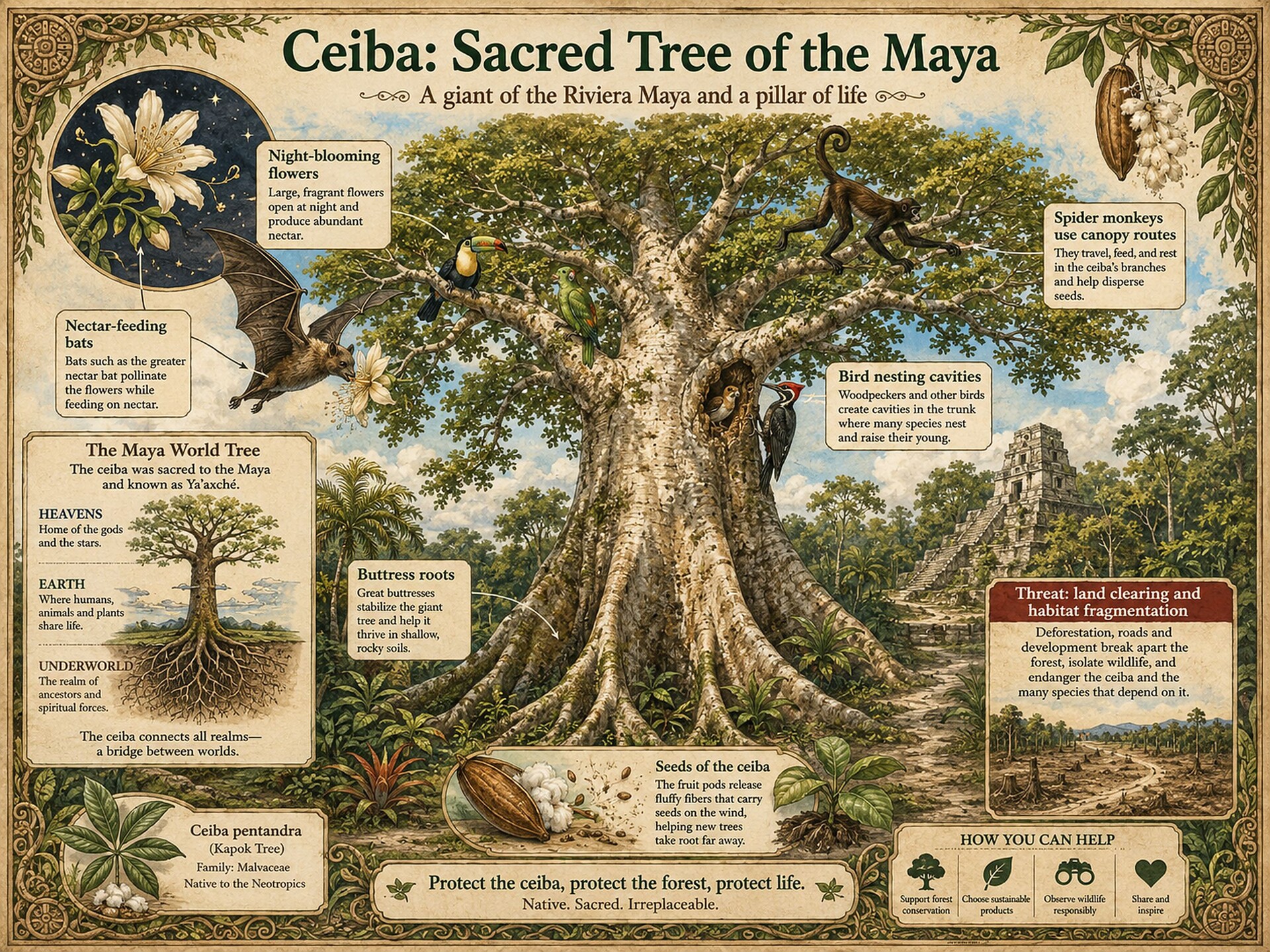
Why it matters to the ecosystem: Ceiba flowers open at night and are pollinated mainly by nectar-feeding bats, making the tree an important food source after dark. Mature trees also provide nesting cavities and perches used by birds you're likely to spot on a Cancun birdwatching trip and other canopy wildlife, and their tall, spreading branches are exactly the kind of highway spider monkeys in the Riviera Maya use to move through the jungle without touching the ground.
Threats: Land clearing for agriculture and tourism development is the main pressure on wild populations, even though individual ceibas are often deliberately left standing. Research on related Ceiba species has found that habitat disruption reduces bat activity and lowers seed production, so a shrinking, fragmented jungle affects the tree's ability to reproduce even where mature specimens survive.
Chaca (Gumbo-Limbo)
Recognizable by its smooth, reddish, peeling bark, this tree's resemblance to sunburned skin has earned it the nickname "tourist tree." It tolerates heat, drought, and salty air well, which is why it shows up often in restoration plantings.
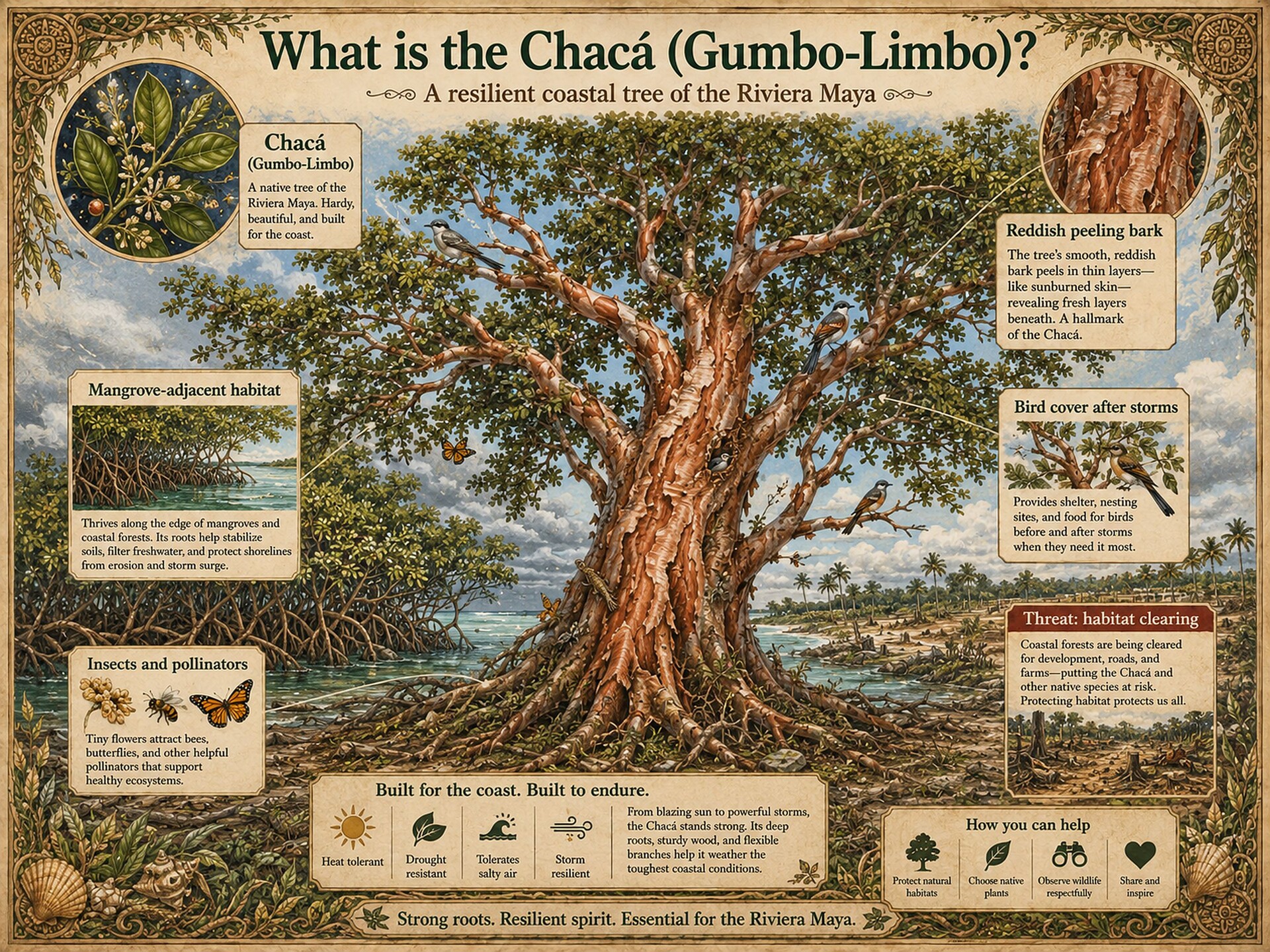
Why it matters to the ecosystem: Chaca grows alongside the region's mangroves as a supporting species, and its wind-tolerant structure lets it survive storms that damage more brittle trees, offering cover for birds and insects in the aftermath.
Threats: The tree itself isn't considered at risk, since it grows quickly and handles hurricanes well. The bigger concern is habitat: ongoing clearing of the mangrove-adjacent land it favors puts pressure on the wider plant community it grows within, even if the chaca survives.
Chechen
Frequently found growing near the chaca, the chechen's sap causes real skin irritation and shouldn't be touched. Local tradition pairs the two trees together, with the chaca said to soothe what the chechen irritates. True or not, it's a good reminder to admire unfamiliar jungle plants without touching them.
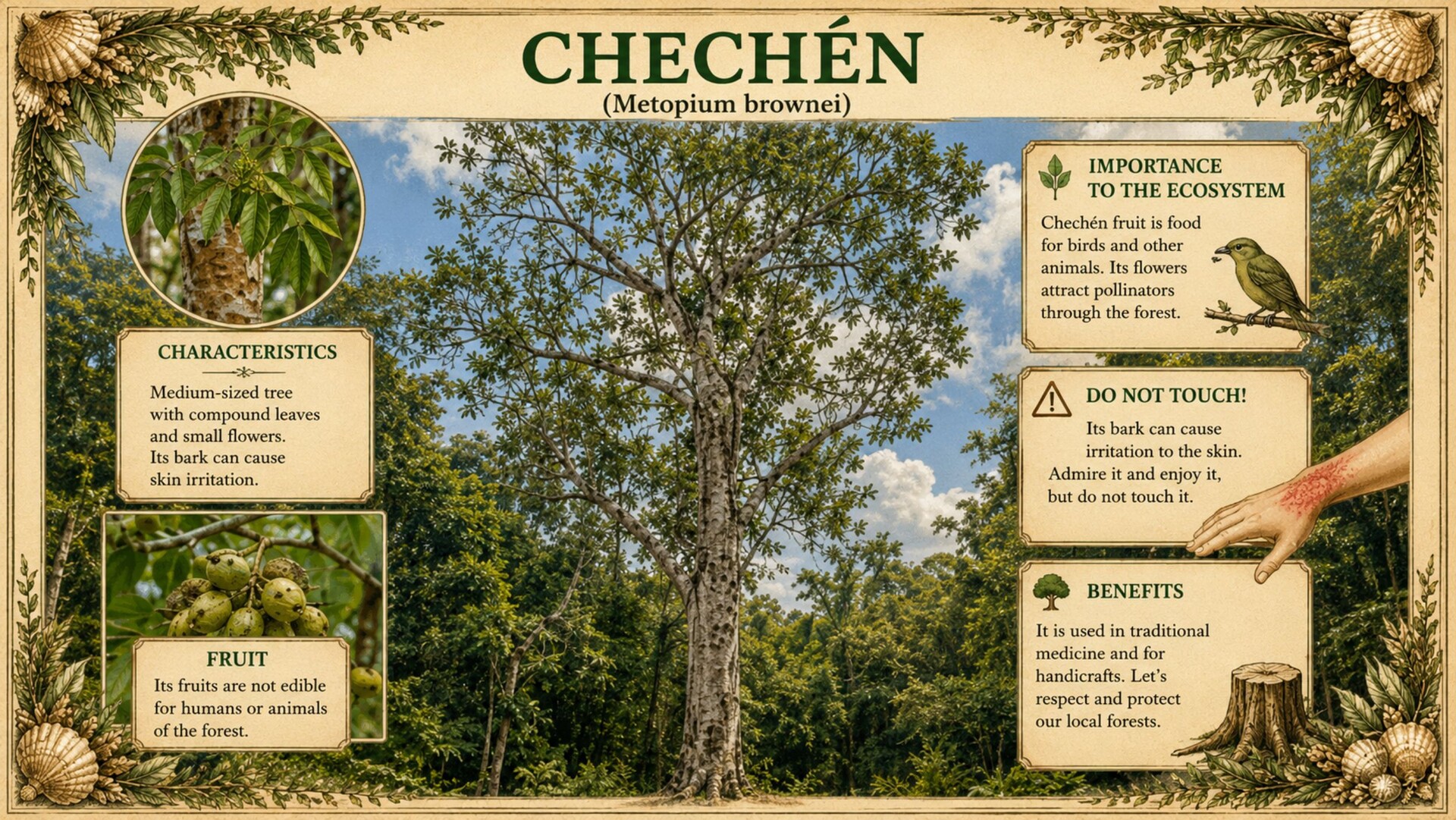
Why it matters to the ecosystem: Despite the sap's effect on human skin, the chechen's fruit is a food source for birds, which are unaffected by the toxin and help disperse its seeds through the forest.
Threats: Because it's often cut down near trails and developed areas out of caution, chechen populations can decline locally even in forest that's otherwise undisturbed.
Mahogany
Mahogany has long been prized for furniture and construction, though mature trees are less common in developed areas now. Its broad canopy and half-meter-wide leaves cast heavy shade over the forest floor below.
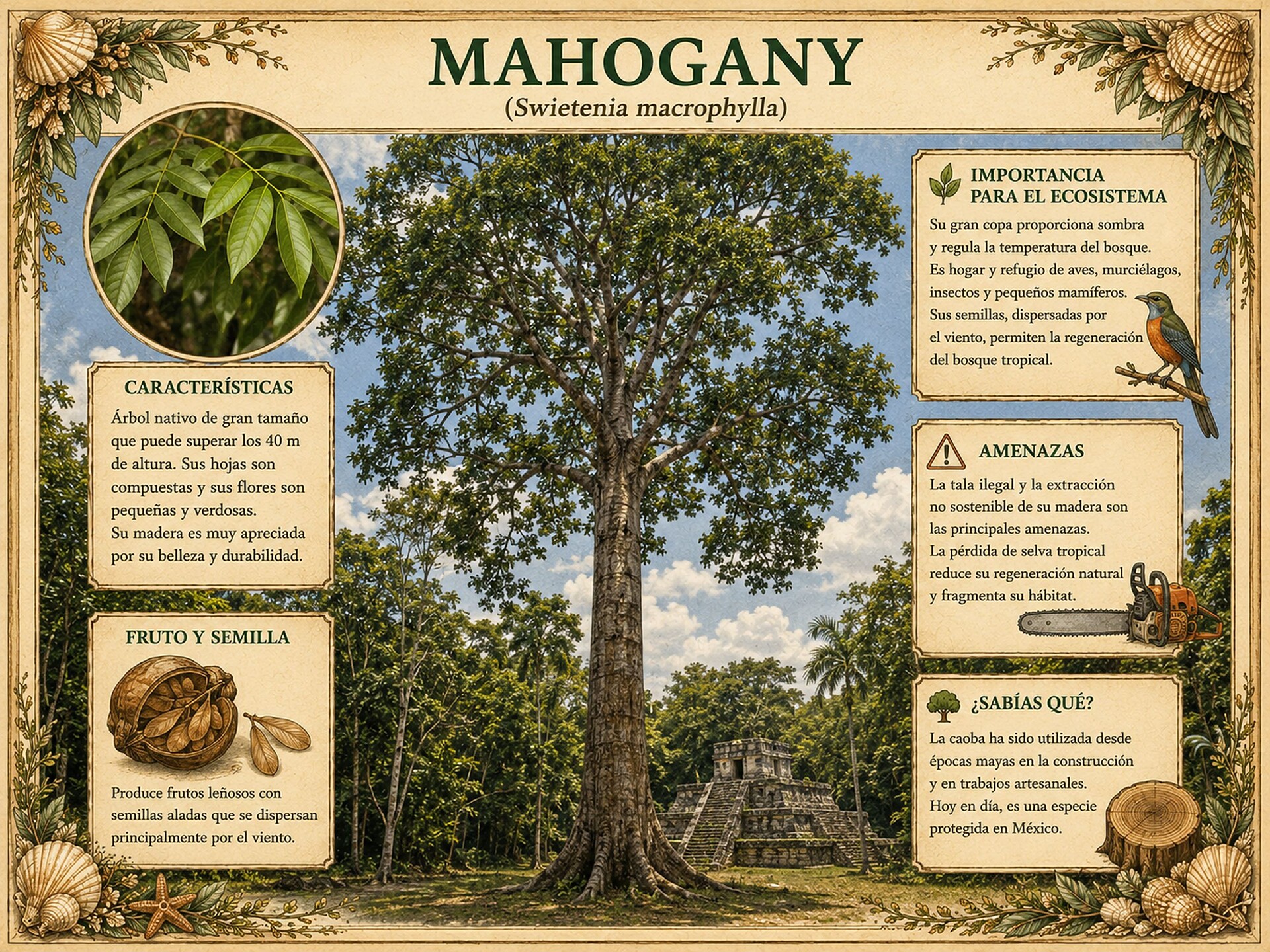
Why it matters to the ecosystem: Large mahogany trees shelter birds and other wildlife in their canopy and branch cavities, and their shade shapes what can grow beneath them. The dense forest they help form is also part of the range still used by jaguars roaming the Yucatán Peninsula.
Threats: Big-leaf mahogany is listed under CITES Appendix II because of decades of overharvesting and illegal logging, and populations have declined sharply across its range. Quintana Roo is one of the few places where community-managed ejido forests have sustained mahogany harvesting long-term rather than depleting it.
Sapodilla
Sapodilla produces a sweet fruit and a natural latex called chicle, once central to the region's chewing-gum industry and still found in Yucatán forests today.
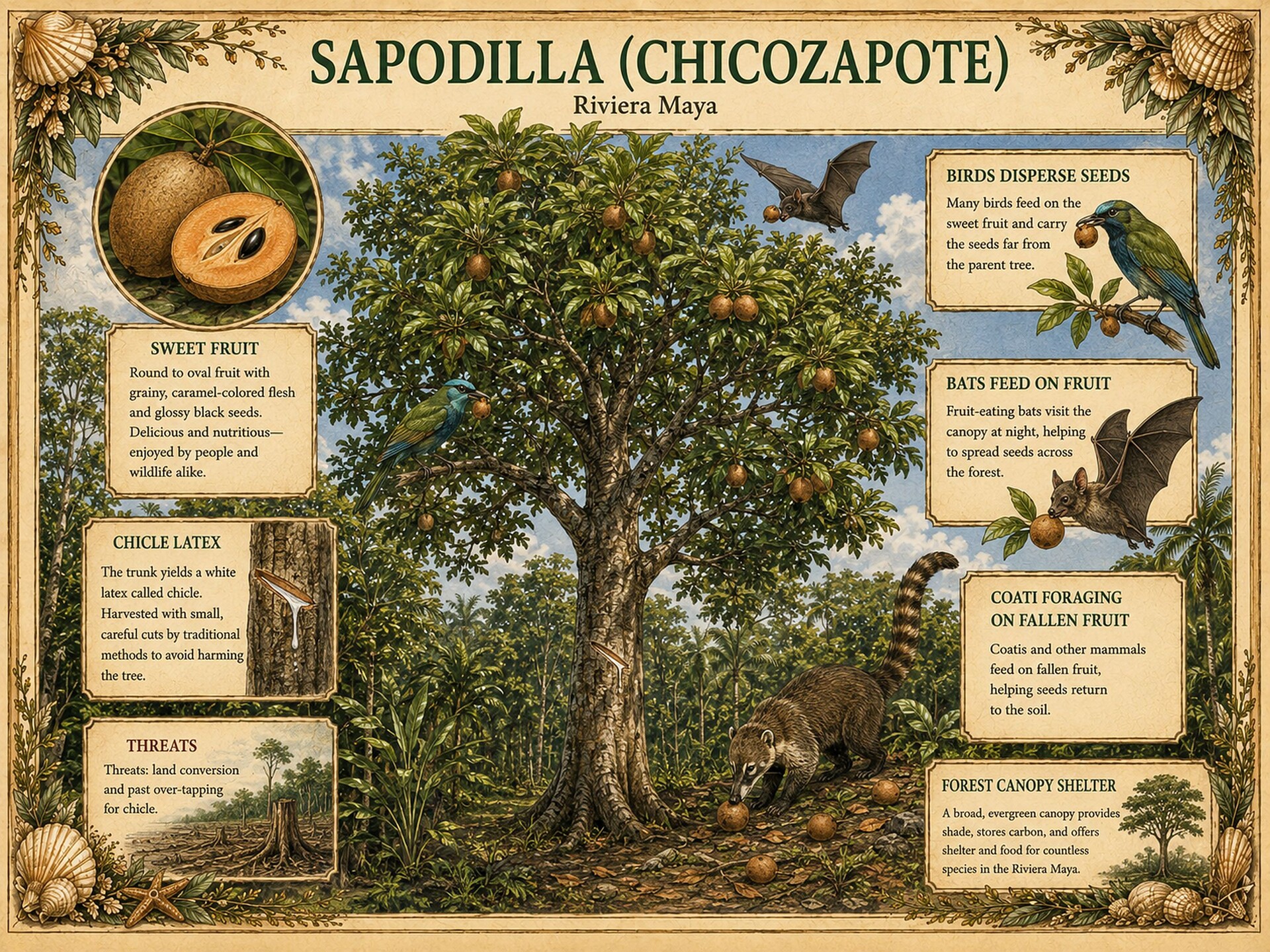
Why it matters to the ecosystem: Its fruit feeds birds, bats, and other wildlife, including coatis foraging on the forest floor, and mature trees add to the canopy that shelters the animals living beneath it.
Threats: Heavy tapping during the chicle industry's peak put pressure on wild sapodilla populations, and like other native hardwoods, it now also faces pressure from land conversion for agriculture and development.
Palm Trees Along the Coast
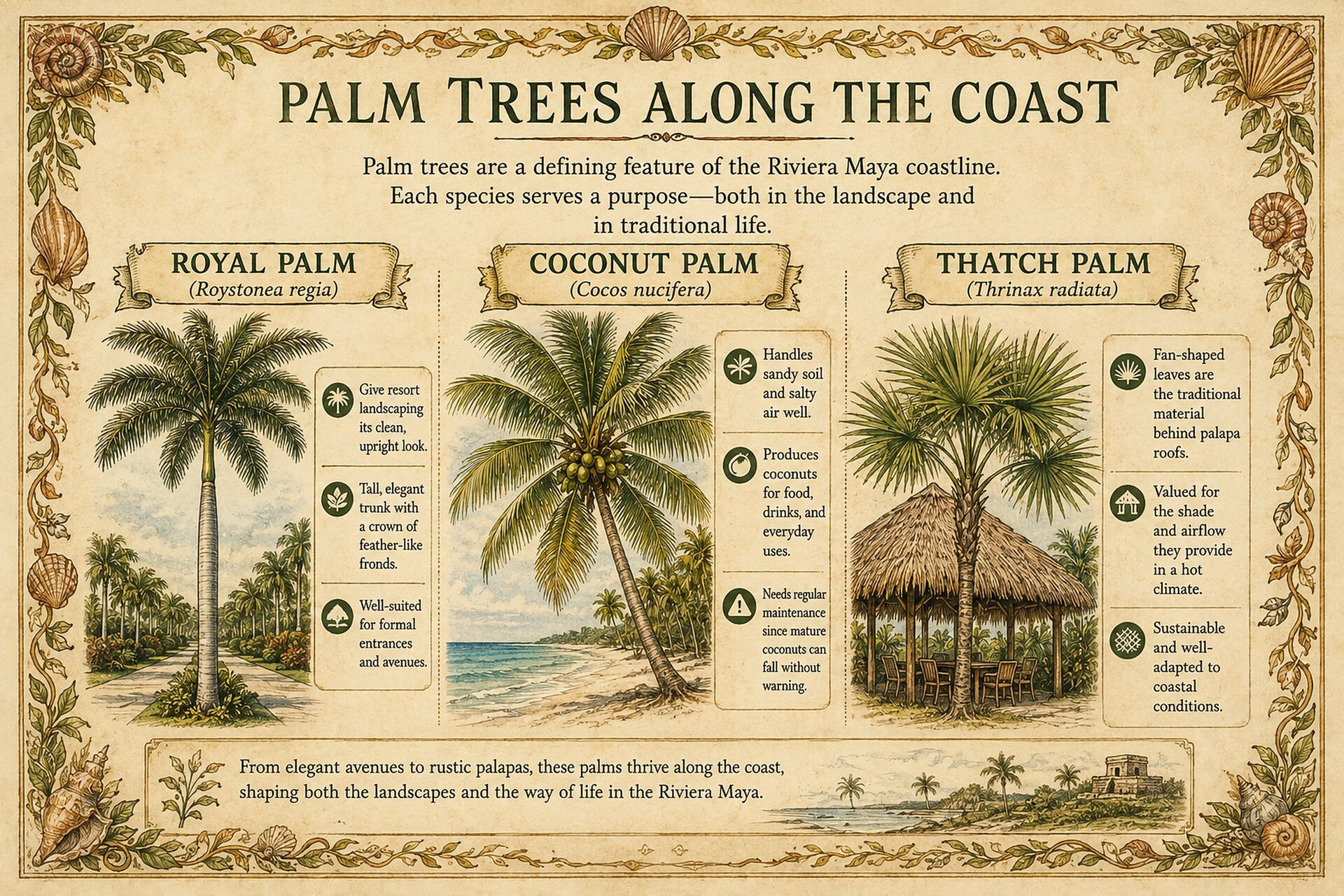
Royal palms give resort landscaping its clean, upright look, while coconut palms handle sandy soil and salty air but need regular maintenance since mature coconuts can fall without warning. Thatch palms, with their fan-shaped leaves, are the traditional material behind palapa roofs, valued for the shade and airflow they provide in a hot climate.
Flowers That Color the Landscape
A handful of flowering plants do most of the visual work across the region:
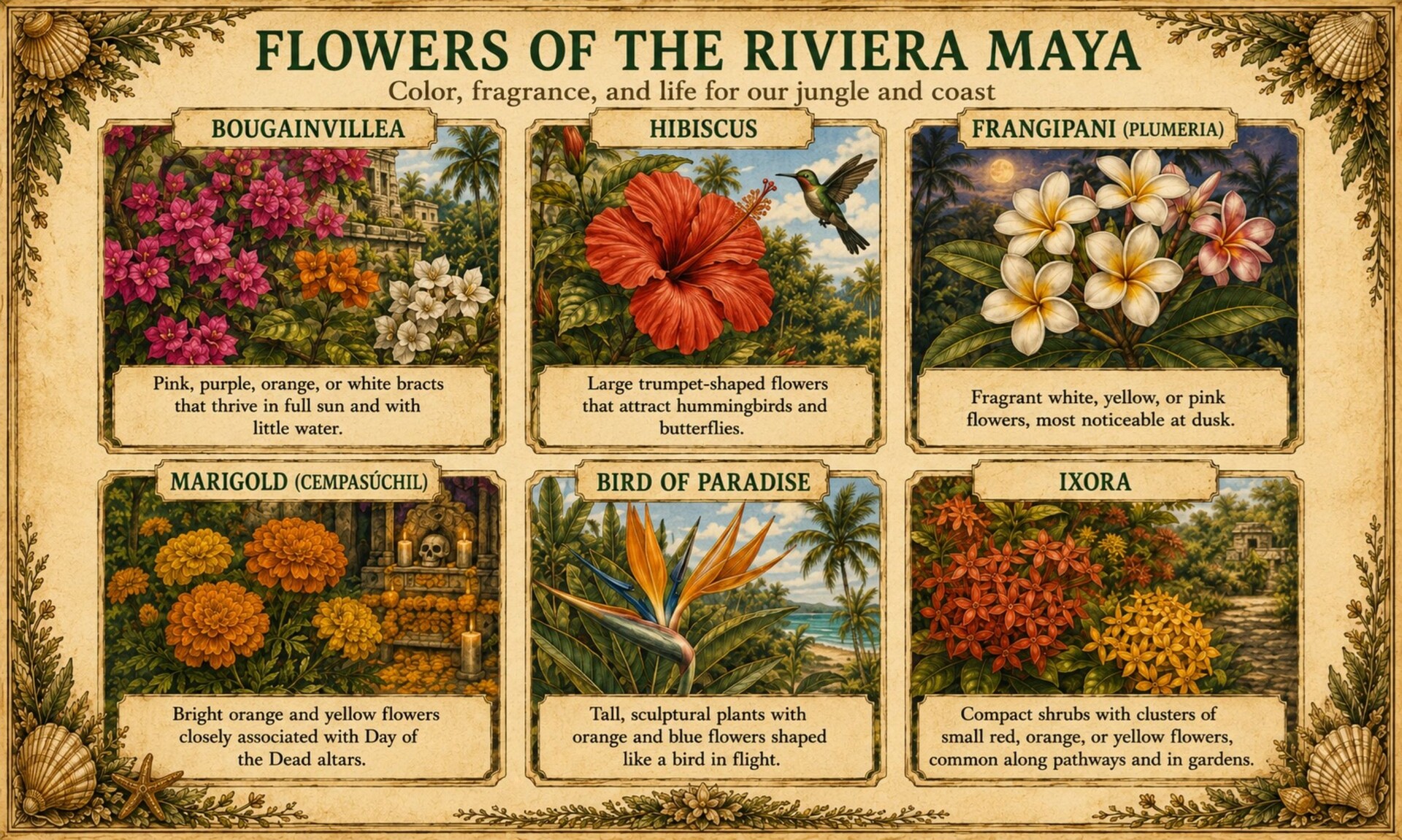
- Bougainvillea: Known for its vivid pink, purple, orange, and white bracts, bougainvillea thrives in full sun and needs very little water once established, making it ideal for walls, entrances, and sunny garden borders.
- Hibiscus: Its large, trumpet-shaped flowers bring bold tropical color to the landscape while also attracting hummingbirds, butterflies, and other pollinators.
- Frangipani (plumeria): Frangipani produces fragrant white, yellow, and pink flowers, with its scent becoming especially noticeable in the evening.
- Mexican marigold: These bright orange and yellow flowers are closely associated with Día de Muertos, when their color and fragrance are used to decorate altars and guide loved ones home.
- Bird of paradise: This tall, architectural plant is prized for its dramatic orange-and-blue flowers, which resemble a bird in flight and add height and structure to tropical gardens.
- Ixora: A compact flowering shrub with dense clusters of red, orange, pink, or yellow blooms, ixora is commonly planted along paths, borders, and entrances for year-round color.
Mangroves and Why They Matter
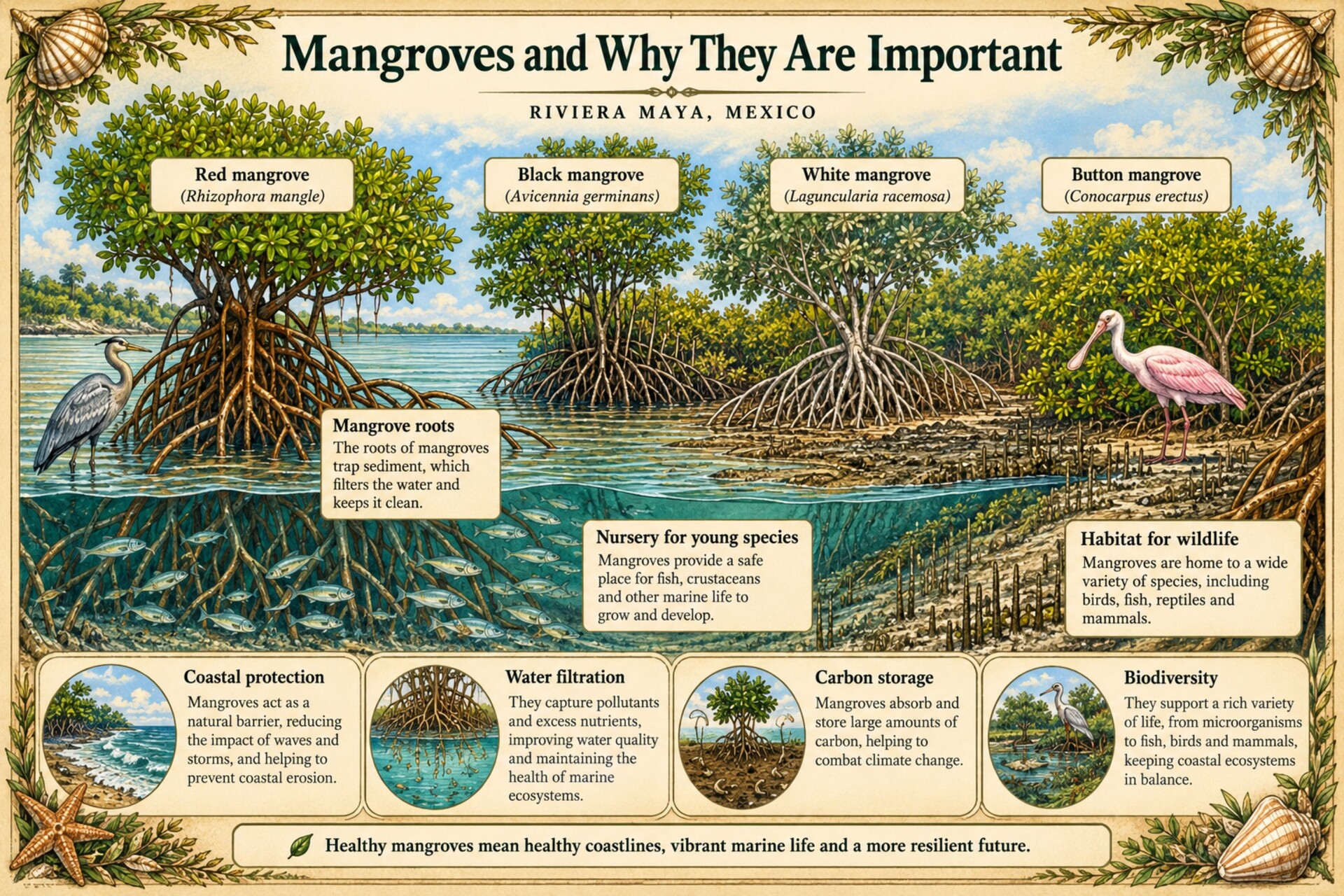
Mangroves don't photograph like a hibiscus bloom, but they're doing more ecological work than almost anything else in the region. Red, black, white, and buttonwood mangroves grow where freshwater and saltwater meet, and their root systems reduce coastal erosion, filter water, store carbon, and shelter fish, birds, and the crocodiles that live among the mangroves near Cancún. At Sandos Caracol, guided tours take guests through the mangrove forest by boat, which is a more direct way to understand why these wetlands matter than any description can offer.
Traditional Maya Plant Uses
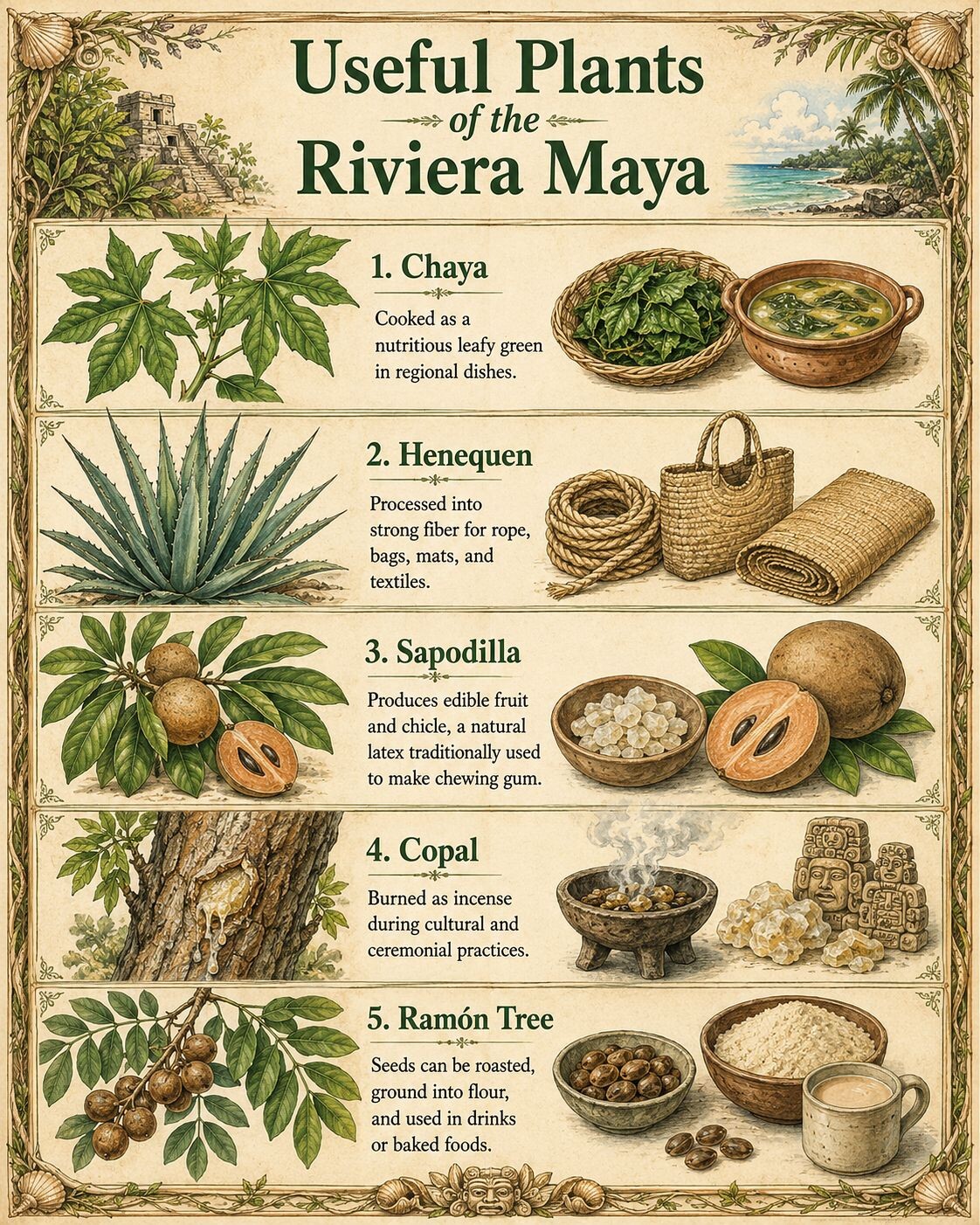
Many plants of the Riviera Maya have uses that extend far beyond decoration. Chaya is prepared as a leafy green in regional dishes, while henequen has long been processed into strong fibers for rope, bags, mats, and other everyday items. Sapodilla produces both edible fruit and chicle, the natural latex once widely used to make chewing gum. Copal resin is burned as incense in ceremonies, and ramón seeds can be roasted, ground into flour, and used in drinks or baked foods. Together, these plants reflect generations of local knowledge about how the jungle can provide food, materials, medicine, and ceremonial resources.
Resort Gardens vs. Jungle Tours
There's a real tradeoff in how most travelers actually experience these plants. Resort gardens are convenient: paved paths, shade, labeled plantings, and a guarantee of seeing bougainvillea, hibiscus, and palms without any planning. The wild jungle, by contrast, is where you'll find mature ceiba trees, wild orchids, and mangrove root systems, along with the far less visible animals that depend on them, Mexico's wild cats among them, but it usually requires a guided excursion, a bit more heat, and a willingness to not touch anything you can't identify. Neither option is wrong, and most trips end up being some mix of both.
What this looks like in practice: A family staying at Sandos Caracol might spend a morning walking the resort's shaded garden paths, pointing out hibiscus and frangipani along the way, then book an afternoon eco tour through the mangrove forest and jungle. The kids get the easy, photogenic version first; the guided tour gives everyone the version with cenotes, howler monkeys, and a guide who can explain what a chechen tree actually does. Neither half feels like a compromise.
None of this requires a botany background to enjoy. A short walk through a resort garden will put you in front of hibiscus, bougainvillea, and palms within minutes, and a single guided jungle or mangrove tour will fill in the rest, ceiba trees, orchids, and the plants the Maya once relied on for food and medicine. The plants and the wildlife are hard to separate anyway; if you want the fuller picture, it's worth reading up on the animals you'll see at Sandos alongside the plants that feed and shelter them. If you're planning a stay in Playa del Carmen, it's worth setting aside at least one morning for the guided version; it's the difference between seeing a nice garden and understanding the jungle it's built next to.
Frequently Asked Questions
What plants are native to the Riviera Maya? Ceiba, chaca, chechen, sapodilla, thatch palms, mangroves, bromeliads, native orchids, chaya, and several agave and cactus species are all native to the region.
Why is the ceiba tree considered sacred? In Maya cosmology, the ceiba was the World Tree, believed to connect the underworld, the human world, and the heavens through its roots, trunk, and branches.
Are there any plants I should avoid touching in the Riviera Maya? Yes. The chechen tree's sap can cause serious skin irritation, and it's best practice generally not to touch unfamiliar bark, sap, or fruit while exploring the jungle.
Can I pick flowers or take seeds home from the jungle? No. Removing plants, seeds, or orchids from the wild can damage fragile ecosystems, and some species are protected.
Do mangroves serve a purpose beyond scenery? Yes. Mangroves reduce coastal erosion, filter water, store carbon, and provide habitat for fish, birds, and reptiles, making them one of the region's most important ecosystems.