



Crocodiles in Cancun: Where to See Them and Safety Tips
Yes, Cancun supports a healthy, thriving population of wild crocodiles. Travelers visiting the Mexican Caribbean often anticipate snorkeling with sea turtles, watching dolphins, and admiring colorful tropical fish, but they are frequently amazed to learn that the area is also home to incredible large reptiles. The Cancun Hotel Zone is essentially a beautifully manicured, narrow strip of land separating the sparkling Caribbean Sea from a vast inland lagoon system. While you will spend your sunlit days enjoying the ocean waves and resort amenities, the lagoon side serves as a vital, protected natural habitat for local wildlife.
The sustained presence of crocodiles in Cancun is a powerful indicator of a robust and healthy wetland ecosystem. Decades of development have transformed Cancun into a premier, world-class vacation spot, yet local environmental agencies work tirelessly to ensure humans and wildlife can coexist in harmony. Seeing a crocodile in its natural habitat is an exciting reminder of the untamed natural beauty that still thrives just meters away from luxury suites and vibrant shopping centers. If you are planning your itinerary and wondering what to do in Cancun, taking the time to observe this delicate balance of nature is highly recommended.
What Is The Nichupté Lagoon Ecosystem?
The Nichupté Lagoon is a massive 3,000-hectare body of calm water flanked by dense, vibrant mangroves, running directly behind the famous Cancun Hotel Zone. It is a precious natural sanctuary that remains a deeply cherished part of the local landscape. The lagoon is actually the meeting point of seven distinct, interconnected bodies of water: the North Basin, Central Basin, South Basin, Borjóquez Lagoon, English River, Mediterranean Lagoon, and Laguna del Amor.
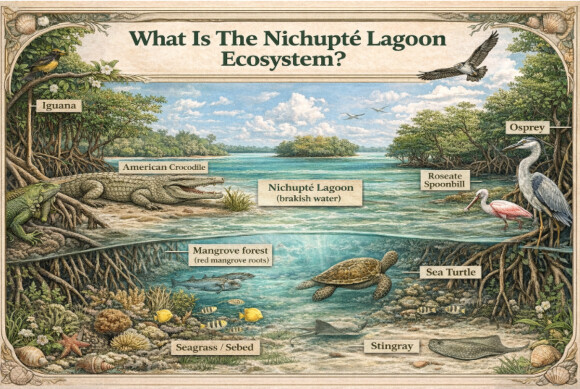
Because these waters connect to the open ocean through narrow, winding channels, the Nichupté Lagoon features a unique blend of fresh and saltwater, creating what is known as a brackish environment. This specific water composition, combined with the dense, protective roots of the red, white, and black mangroves, creates a perfect haven for marine life. The mangroves provide safe, nutrient-rich breeding grounds for hundreds of fish species, crustaceans, and beautiful migratory birds. Consequently, this abundance of natural prey makes the lagoon an ideal hunting and breeding ground for wild crocodiles. The glassy waters allow the reptiles to swim effortlessly, while the sun-baked muddy banks offer prime locations for sunbathing and regulating their cold-blooded body temperatures.
Which Crocodile Species Live In The Riviera Maya?
Visitors to the Cancun destination and the surrounding Riviera Maya might encounter two distinct species of crocodiles during their travels. Both play a crucial role in maintaining the biological health of the local wetlands, though they prefer slightly different habitats and exhibit unique physical characteristics.

The American Crocodile (Crocodylus acutus)
The American crocodile is the predominant species you will find in the Nichupté Lagoon and along the coastal areas of the Riviera Maya. Highly adaptable and incredibly resilient, American crocodiles thrive in brackish and saltwater environments due to specialized salt glands under their tongues that allow them to safely excrete excess salt. They are recognizable by their distinct, narrow V-shaped snouts and pale, grayish-green coloration. This species can grow quite large, with mature males frequently reaching lengths of 13 to 15 feet. Despite their impressive size, American crocodiles are generally reclusive and prefer to avoid human interaction. They spend their days peacefully basking in the warm Mexican sun or gliding quietly through the mangrove channels in search of fish, birds, and small mammals.
The Morelet's Crocodile (Crocodylus moreletii)
Typically smaller and preferring strictly freshwater environments, the Morelet's crocodile is another fascinating resident of the Yucatan Peninsula. You are highly unlikely to see this species in the saltwater or brackish lagoons of the main tourist zones. Instead, they find sanctuary in inland cenotes, freshwater swamps, and dense jungle marshes. They feature a broader, U-shaped snout compared to the American crocodile and display a much darker, brownish-black coloring. Adult Morelet's crocodiles rarely exceed 10 feet in length. They are primarily nocturnal hunters, feeding on fish, turtles, and smaller aquatic prey deep within the quiet jungle interior.
Where Can Travelers Safely Observe Crocodiles In Cancun?
Spotting a crocodile in its natural habitat is a thrilling, memorable experience for nature lovers and photography enthusiasts. Several stunning locations and guided experiences prioritize your safety and promote environmental responsibility.
Nichupté Lagoon Tours: Booking a guided eco-tour of the Nichupté Lagoon is the safest, most educational method for observation. Numerous responsible tour operators offer excursions, including sunset kayak trips, stand-up paddleboarding, and specialized wildlife boat tours. Professional local guides navigate the winding mangrove channels safely, share fascinating facts about the ecosystem, and maintain a respectful distance from the animals.
Malecon Tajamar: For those who prefer a gentle stroll on dry land, the Malecon Tajamar boardwalk or the beautifully situated lagoon-facing restaurants at Plaza La Isla offer excellent vantage points. As you enjoy a meal or an evening walk, you might spot a crocodile floating calmly near the surface or resting peacefully on the muddy banks across the water.
Croco Cun Zoo: Located just a short, scenic drive south of Cancun on the highway toward Puerto Morelos, Croco Cun Zoo operates as an interactive conservation center. This is a brilliant, engaging half-day trip for families. You take a guided tour with a passionate local biologist, learn about regional wildlife rescue efforts, and observe crocodiles of all ages in secure, well-maintained enclosures.
Sian Ka'an Biosphere Reserve: Travelers willing to venture slightly south past Tulum will discover a spectacular, entirely wild setting at the Sian Ka'an Biosphere Reserve. This massive UNESCO World Heritage site protects thousands of hectares of pristine mangroves and marine habitats. Guided boat tours through the ancient Mayan canals provide a rare chance to see crocodiles basking alongside gentle manatees and vibrant tropical birds.
Rio Lagartos: Situated on the northern coast of the Yucatan Peninsula, Rio Lagartos is globally famous for its dense pink flamingo population. Taking a small boat tour, known locally as a lancha, provides excellent opportunities for wildlife photography in a highly protected, serene environment where nature flourishes undisturbed.
How Do Crocodiles Contribute To The Local Environment?
Wild crocodiles are ecological keystones in the Riviera Maya, acting as vital guardians of the wetlands. Their ongoing presence in Cancun's mangroves indicates a thriving, balanced, and unpolluted environment. As apex predators, they regulate the populations of other animals, such as predatory fish and crustaceans. By keeping these populations naturally in check, crocodiles prevent any single species from overpopulating and depleting the local resources, ensuring vibrant biodiversity flourishes.
Furthermore, their physical movements heavily benefit the complex wetland geography. As large crocodiles navigate through the dense mud and vegetation, they naturally dredge deep, navigable channels. During severe dry seasons, these deep channels retain life-saving water, serving as vital refuges for fish, turtles, and other aquatic life that would otherwise perish in a drought. When crocodiles abandon old nesting sites, the mounds they leave behind provide perfect, elevated dry land for turtles and birds to safely lay their own eggs. Protecting the crocodile population directly protects the entire mangrove ecosystem. This deep interconnectedness is a core reason why choosing sustainable travel practices is so vital for preserving the region for generations to come.
What Are The Safety Guidelines For Coexisting With Cancun Wildlife?
Crocodiles in Cancun are wild predators and demand a high level of respect, much like any wild animal you might encounter on your travels. Incidents involving tourists are exceedingly rare, but adhering to basic, sensible safety rules ensures a secure, worry-free vacation for you and protects the animals from unnecessary human interference.

Avoid Swimming in Lagoons: The Nichupté Lagoon is strictly not a recreational swimming area. While the water looks calm, it is a designated wildlife habitat. We encourage you to stick to the spectacular ocean beaches, designated swimming cenotes, and your resort's pristine swimming pools.
Pay Attention to Signage: As you walk along the lagoon side of the Cancun Hotel Zone or near the lush golf courses, you will frequently see yellow, diamond-shaped signs depicting a crocodile. These signs mark known, active habitats. Respect these boundaries. Never cross fences, climb over barriers, or stand directly on the muddy banks to get a closer look.
Do Not Feed the Wildlife: Feeding wild crocodiles is illegal and incredibly dangerous for everyone involved. Tossing food into the lagoon alters their natural hunting behaviors and causes them to associate humans with a food source. This practice habituates the animals, making them bolder and increasing the risk of negative encounters for future visitors. Let them hunt naturally.
Keep a Safe Distance: If you happen to spot a crocodile while walking near a marina, dock, or resort pathway, simply maintain a respectful distance of at least 30 to 50 feet. Never attempt to approach, touch, or provoke the animal.
Pet and Child Safety: When walking near lagoon areas, marinas, or dense tropical vegetation, keep children close by your side and ensure pets are securely on a short leash. Small animals moving quickly near the water's edge can inadvertently trigger a crocodile's natural hunting instincts.
How Can Guests Experience Nature At Sandos Hotels & Resorts?
Your choice of accommodation heavily influences your connection to the local environment. Choosing eco-friendly vacations allows you to enjoy luxurious comfort, outstanding service, and incredible dining while maintaining a deep, active respect for regional biodiversity.
Sandos Cancun
Situated perfectly in the vibrant heart of the Hotel Zone, Sandos Cancun provides an ideal vantage point for appreciating both of Cancun's distinct aquatic environments. The resort is nestled directly between the spectacular white sands of the Caribbean Sea and the vibrant mangroves of the Nichupté Lagoon. Guests spend their mornings lounging by the luxurious three-layered infinity pool facing the ocean, and spend their evenings watching the breathtaking sunset glow over the calm lagoon. The property allows you to enjoy the natural beauty of the region from the comfort of stylish, upscale suites, providing easy access to safe, guided lagoon tours just minutes away.
Frequently Asked Questions About Crocodiles In Cancun
Do crocodiles go on the beach in Cancun? It is extremely rare to see a crocodile on the ocean-facing beaches of the Cancun Hotel Zone. Crocodiles heavily prefer the calm, brackish environments, muddy banks, and dense vegetation cover provided by the Nichupté Lagoon. The strong ocean waves, active currents, and high salinity of the open sea simply do not appeal to their natural habitat preferences.
Are crocodile attacks common in Cancun? No, you can rest easy knowing unprovoked incidents are highly unusual. The vast majority of encounters are simply peaceful, awe-inspiring sightings from a distance. Issues generally only arise when individuals actively ignore official warning signs, attempt to feed the animals, or illegally enter the lagoon waters for swimming.
Is it safe to kayak or paddleboard in the Nichupté Lagoon? Many fully licensed tour operators offer beautiful kayak or stand-up paddleboard excursions in the lagoon. These tours are completely safe because they are led by experienced local guides who deeply understand the animals' behavior, map out secure routes, and actively avoid sensitive nesting areas. Always book with a reputable, licensed tour company rather than attempting to explore the dense mangroves independently.
What should I do if I see a crocodile near my hotel? Simply observe the magnificent creature from a safe distance and take your photographs without approaching. If the animal happens to be resting on a guest pathway, golf course, or marina dock, notify the friendly hotel staff or security immediately. Local wildlife management teams have strict, safe, and highly effective protocols in place to gently handle the situation and relocate the animal if necessary without causing it harm.
Are there crocodiles in cenotes? While the American crocodile strongly prefers the coastal lagoons, the smaller Morelet's crocodile occasionally inhabits remote, completely wild cenotes deep in the jungle. However, the popular, highly trafficked cenotes designated for tourist swimming, snorkeling, and diving are closely monitored, expertly managed, and completely safe for public enjoyment.