



Sargassum in Playa del Carmen & Cancun | Sandos Resorts
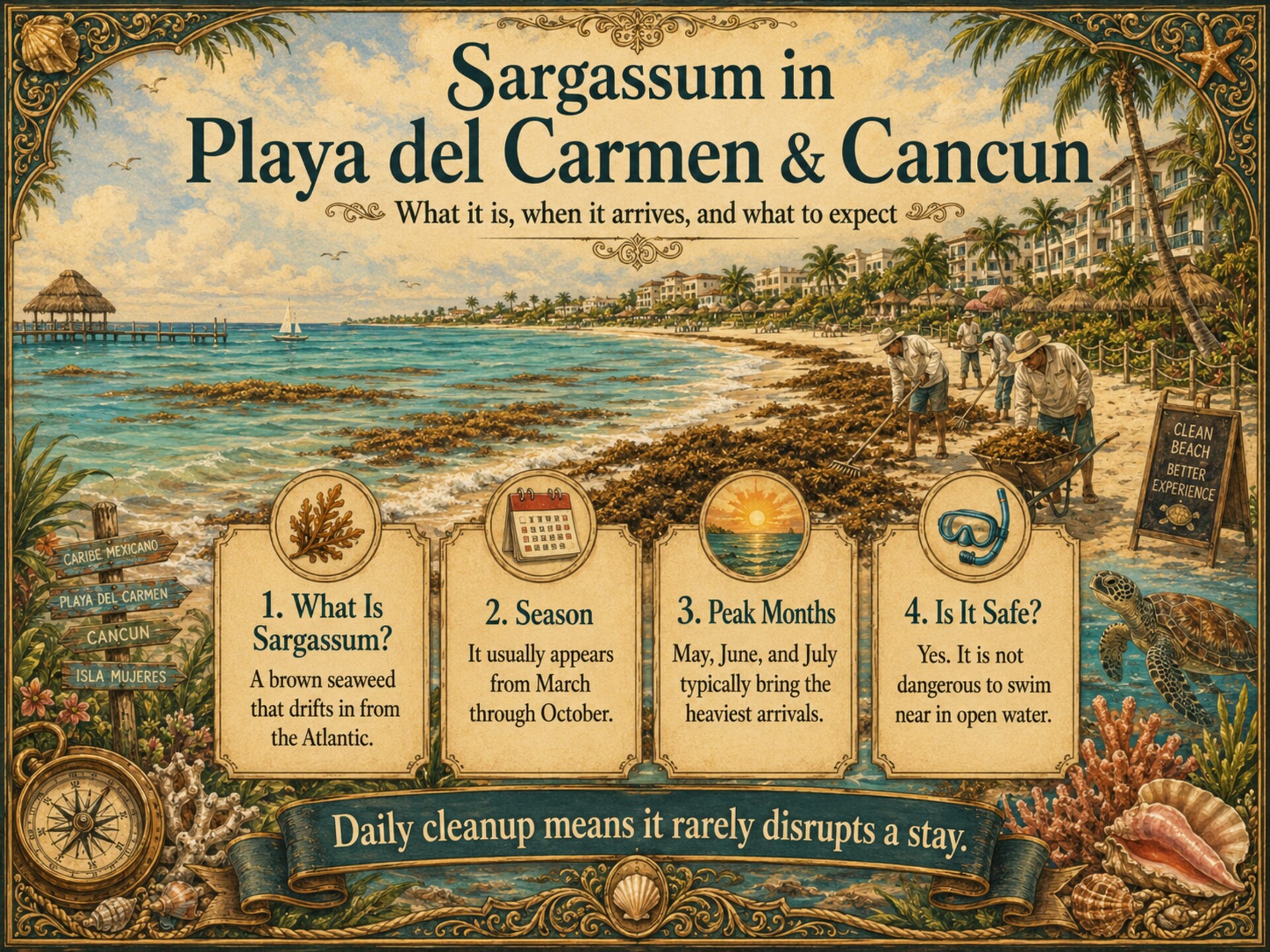
Sargassum, a brown seaweed that drifts in from the Atlantic, shows up along the Mexican Caribbean between March and October, with the heaviest arrivals typically in May, June, and July. Playa del Carmen tends to see more of it than Cancun because Cancun's coastline is partly shielded by Isla Mujeres. It isn't dangerous to swim near, and resorts run daily cleanup so it rarely disrupts a stay.
If you're planning a trip to Playa del Carmen or Cancun, you've probably come across the word "sargassum" in reviews or travel forums. It's a natural, seasonal part of the Caribbean coastline, and understanding when it shows up and why can help you plan a trip with fewer surprises.
Is Sargassum a Problem in Playa del Carmen and Cancun?
It can be, depending on the week and the year. Sargassum doesn't arrive on a fixed schedule, and it doesn't affect every beach the same way. When large mats wash ashore, they can pile up on the sand and give off a sulfur-like smell as they decompose in the sun.
The seaweed itself isn't dangerous to swim near in open water. The real issue is what happens once it accumulates onshore, which is when beach teams step in to clear it before it affects the guest experience.
When Does Sargassum Season Happen?
Sargassum season generally runs from March through October, driven by seasonal wind and current patterns that carry the seaweed westward across the Atlantic. Outside that window, beaches are typically clear.
Within the season, timing varies year to year. Warmer sea surface temperatures and stronger easterly trade winds tend to push more sargassum toward shore, so no two years look identical.
What Are the Worst Months for Sargassum?
May, June, and July are historically the peak months, when high temperatures, long sunlight hours, and strong trade winds combine to push large sargassum mats onto the coast.
Even during peak season, conditions can shift day to day. A beach can be completely clear one morning and see a heavier arrival by afternoon, which is exactly the kind of tradeoff worth planning around: travelers chasing the best weather of the year (May through August) are also booking into the months with the highest sargassum risk, while those who visit in the shoulder months of March, April, or October often get milder seaweed conditions alongside slightly cooler water.
What this looks like in practice: A couple booking a June wedding at a beachfront resort might ask about historical sargassum patterns for that week, then decide to hold the ceremony on a stretch of protected beach or move photos to a pool deck as a backup, rather than picking a different month entirely. Either choice can work; it's about knowing the tradeoff going in rather than being surprised by it.
Is Sargassum Worse in Cancun or Playa del Carmen?
Playa del Carmen generally sees more sargassum than Cancun. The difference comes down to geography.
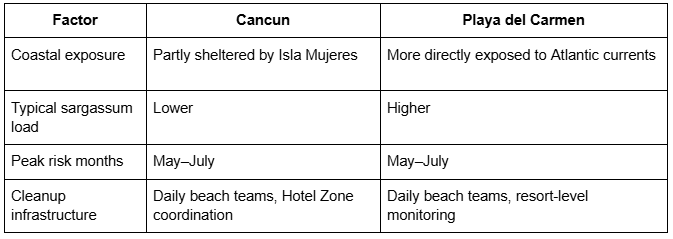
Isla Mujeres acts as a natural buffer for much of the Cancun Hotel Zone, deflecting some incoming sargassum before it reaches the mainland beaches. Playa del Carmen sits along a more open stretch of coastline, so it's more likely to see direct landings when wind and currents line up. That said, both destinations can have clear weeks and heavy weeks, and conditions can change within a single season.
What Causes Sargassum to Bloom?
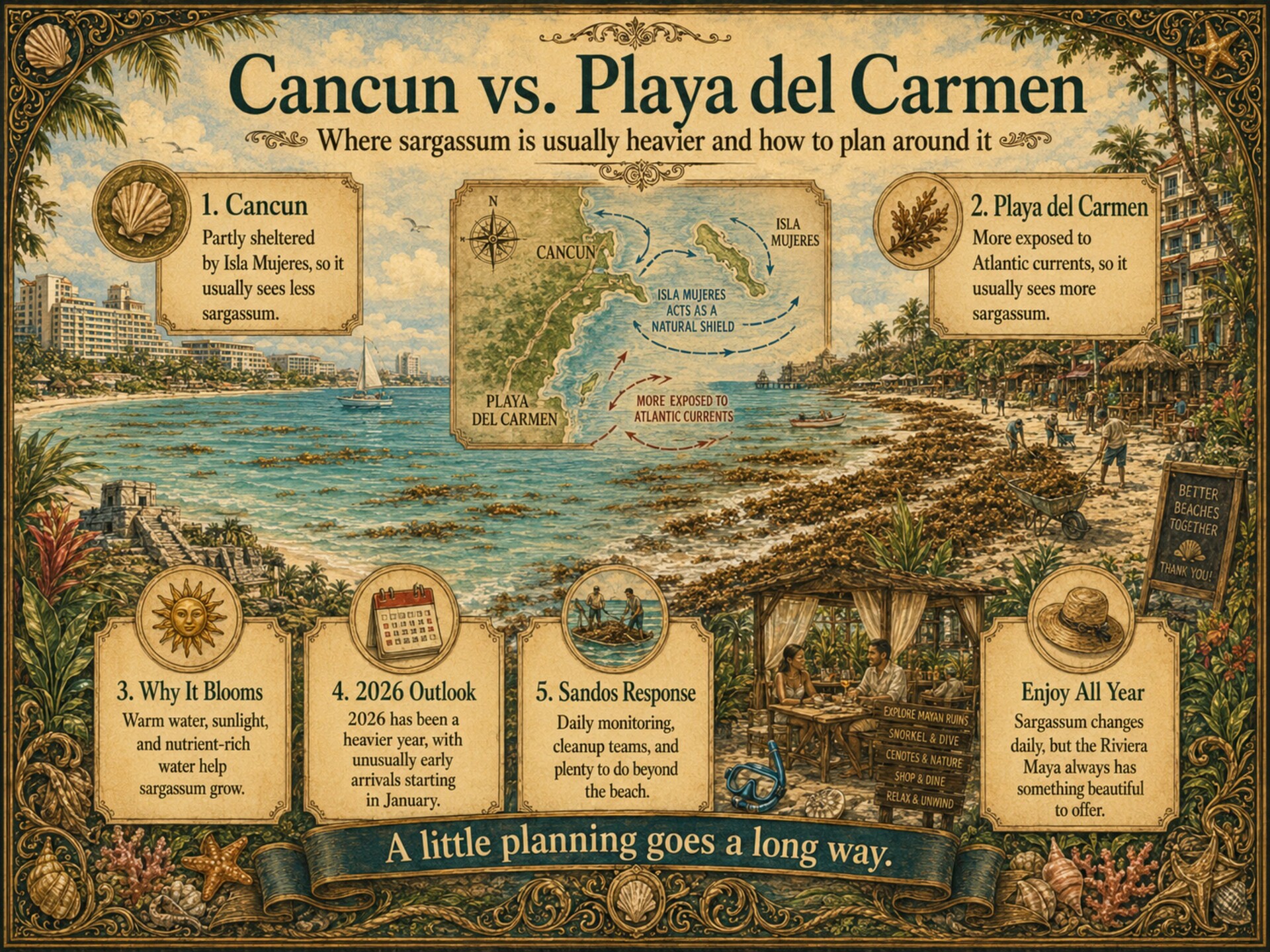
Two main factors drive the sargassum increase the Caribbean has seen since around 2011:
- A shift in ocean circulation. A rare North Atlantic Oscillation event in 2009–2010 altered wind and current patterns, pushing sargassum out of its traditional home in the Sargasso Sea and into the tropical Atlantic.
- Nutrient-rich water mixing to the surface. In the tropical Atlantic, deep water rich in nitrogen and phosphorus rises to the surface, fueling rapid sargassum growth wherever it meets warm temperatures and strong sunlight.
Contrary to popular belief, Amazon River runoff and Saharan dust play only a minor role. The bigger drivers are deep-ocean nutrients and the circulation patterns that carry them to the surface, according to NOAA's ocean science division.
Once sargassum blooms in the eastern tropical Atlantic early in the year, currents carry it westward, reaching Mexico, the Dominican Republic, and other Caribbean coastlines by late spring. It keeps drifting into the Gulf of Mexico, where warmer water temperatures between August and October cause it to break down.
Is 2026 a Heavier Sargassum Year?
Yes. Satellite monitoring from the University of South Florida's Optical Oceanography Lab has tracked 2026 as one of the more significant sargassum years on record, with early arrivals reported in the Mexican Caribbean as far back as January, well ahead of the usual March start. Amounts across the Atlantic began their expected seasonal decline in July, though beaching events can still continue into the fall in some areas.
If you're booking based on older "safe months" advice, it's worth checking a current source rather than assuming the pattern repeats exactly. The Sargassum Tracker run by the Caribbean Coastal Ocean Observing System publishes satellite imagery and short-term forecasts that are updated more frequently than most travel guides.
How Sandos Manages Sargassum for Guests
At Sandos Hotels & Resorts, beach conditions are monitored daily using satellite forecasts and on-site checks, so cleanup crews can respond before sargassum builds up. Guests staying at Sandos Playacar or the jungle-set Sandos Caracol, both in Playa del Carmen, get real-time updates on beach conditions during their stay, along with a full slate of pools, water parks, and eco-activities that don't depend on the shoreline at all.
At Sandos Cancun, the Hotel Zone location benefits from Isla Mujeres' natural buffering, and the resort applies the same daily monitoring and sustainable cleanup practices.
Sargassum decomposing on the sand also feeds coastal ecosystems when it's managed sustainably, which is part of why resorts avoid heavy machinery in favor of manual and low-impact removal near dunes and mangroves. It's the same nearby mangrove and lagoon habitat that supports the manatees, crocodiles, and wading birds travelers often ask about, and the birdlife around Playa del Carmen that makes the region worth exploring beyond the beach.
Planning Your Trip Around Sargassum
Sargassum isn't something to build an entire itinerary around, but it's worth a quick check before you finalize dates, especially if beach time is the main draw. Looking at a recent satellite bulletin, reading current guest reviews for your specific resort, and building a few pool days or excursions into your plans will cover most scenarios. A resort with strong daily cleanup and plenty to do beyond the shoreline, like the pools, cenotes, and eco-tours at Sandos properties, tends to hold up well no matter what the beach looks like on a given day.
Ready to see the Riviera Maya for yourself? Explore Sandos resorts in Playa del Carmen and Cancun and check current availability for your travel dates.
Frequently Asked Questions
Is it safe to swim if there's sargassum in the water? Yes. Sargassum floating in open water isn't dangerous to swim near. The main concern is decomposing seaweed piled up on the sand, which resorts clear daily.
Which is better for avoiding sargassum, Cancun or Playa del Carmen? Cancun generally sees less sargassum thanks to the natural shelter of Isla Mujeres, but both destinations can have clear and heavy weeks within the same season.
What month has the least sargassum in the Mexican Caribbean? Outside the March–October season, beaches are typically clear. Within the season, November through February usually sees the lowest amounts.
Does sargassum affect Los Cabos resorts? No. Los Cabos sits on the Pacific side of Mexico's Baja Peninsula, outside the Atlantic and Caribbean currents that carry sargassum, so it isn't affected by this seasonal bloom.
Why does sargassum smell bad? As sargassum dries and decomposes on the beach, it releases hydrogen sulfide gas, which produces the sulfur-like odor some travelers notice during heavy accumulation periods.
Can I get a refund if sargassum affects my beach vacation? Refund policies vary by resort and booking type. It's best to check current beach conditions and your resort's specific policy directly before booking or arrival.