



La Catrina: Meaning and History of the Day of the Dead Icon
La Catrina (La Calavera Catrina) is the elegantly dressed female skeleton that has become the best-known symbol of Mexico's Day of the Dead. She began as a satirical print by the artist José Guadalupe Posada in the early 1910s, mocking people who rejected their roots to imitate European fashion. Diego Rivera later gave her a full body and her famous name, and today she represents the idea that death comes for everyone, rich or poor.
La Catrina is everywhere during Día de Muertos. She appears in the wide-brimmed hats and painted faces of parade-goers, as clay figures in market stalls and in murals across Mexico. Most people recognize her instantly, but far fewer know that she started life as a joke at the expense of Mexico's social climbers.
This guide explains who La Catrina is, where she came from and how she became the face of Catrina Day of the Dead celebrations. It also covers what she represents and where you can see her in Mexico, whether you're planning a costume or a trip.
Who Is La Catrina?
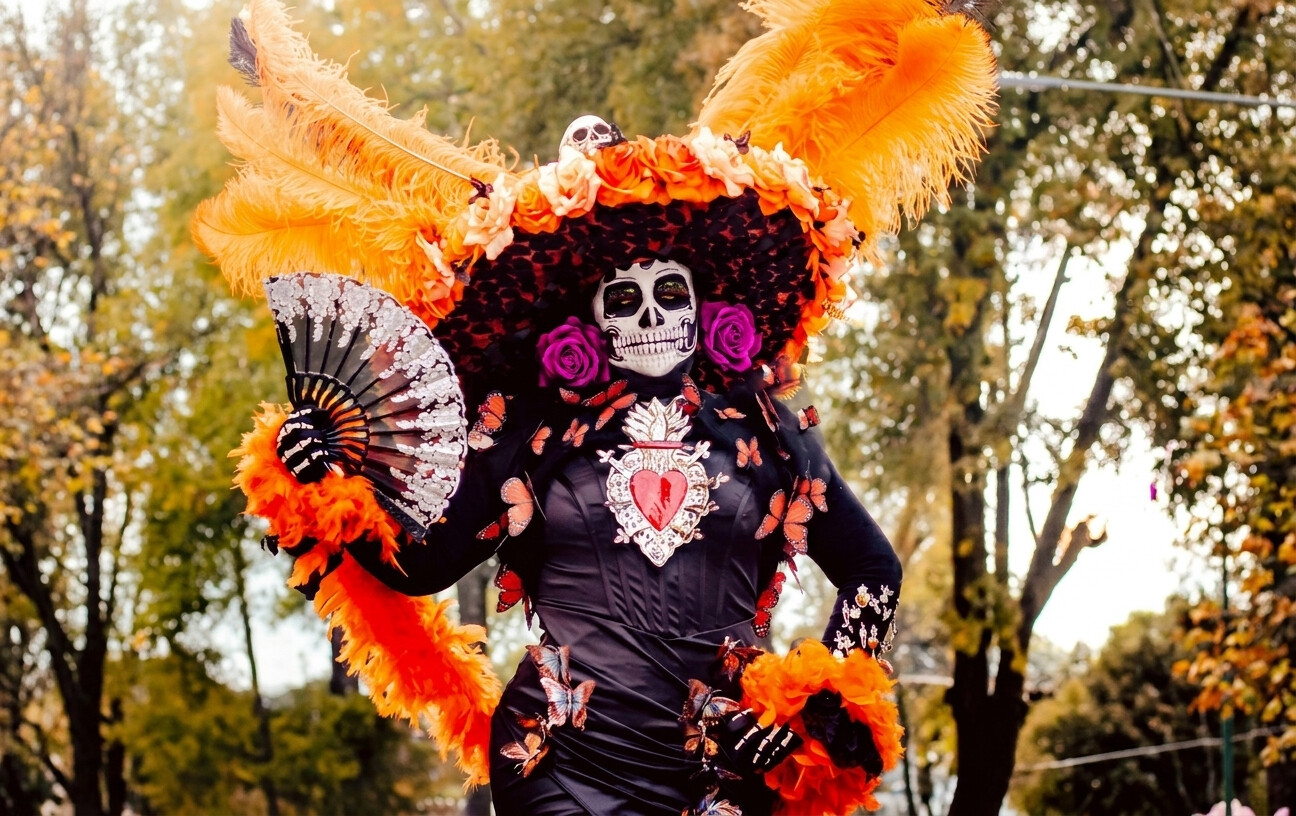
La Catrina is a skeleton dressed as an upper-class lady, usually wearing a long gown and an oversized hat decorated with feathers or flowers. Her full name, La Calavera Catrina, roughly translates as "the elegant skull." A calavera is a skull, and a catrina is a fashionable, well-dressed woman.
She isn't a goddess or a religious figure, and she wasn't a real person. She's a character created by an artist who has grown, over the past century, into a national symbol.
The Origin of La Catrina: Posada's Calavera Garbancera
La Catrina's story begins with José Guadalupe Posada (1852–1913), a printmaker and cartoonist from Aguascalientes who worked in Mexico City. Posada was famous for his calaveras, illustrations of skeletons that accompanied satirical verses about politicians, the wealthy and everyday life.
Around 1910 to 1913, he created an etching of a grinning skull wearing a large, French-style hat trimmed with feathers. He called her La Calavera Garbancera. The garbanceros were street vendors who sold chickpeas, and the name was used to mock people who denied their Indigenous heritage and dressed like Europeans to appear wealthy.
The joke was sharp and simple: however fancy your clothes, underneath you're the same skeleton as everyone else. Posada's original image showed only the skull and the hat. The body came later.
How Diego Rivera Turned Her Into La Catrina
Posada died in 1913 with little recognition, but artists rediscovered his work in the following decades. The most important of them was the muralist Diego Rivera.
Between 1946 and 1947, Rivera painted the mural Dream of a Sunday Afternoon in the Alameda Central, which pictures centuries of Mexican history on a single promenade. At its center, he placed Posada's skeleton lady with a full body, an elegant white gown and a feathered boa. The boa is widely read as a reference to Quetzalcóatl, the feathered serpent of Mesoamerican tradition. She stands between Posada himself and a childhood version of Rivera, whose hand she holds, with the painter Frida Kahlo just behind them.
Rivera's mural made the name Calavera Catrina stick for good. "Catrina" is the feminine form of catrín, a Mexican term for a dandy or well-dressed gentleman. By linking her to Indigenous imagery, Rivera also shifted her meaning. What began as a satire of people rejecting their roots became a proud symbol of Mexican identity. Diego Rivera's Catrina is the version most people picture today.
What Does La Catrina Represent?
Ask what La Catrina means and you'll hear several answers, each rooted in her history:
- Death as the great equalizer. Rich or poor, everyone ends up the same. This was Posada's original message, and it remains the core of the character.
- A playful attitude toward death. Day of the Dead treats death as part of life, something to remember with humor and affection rather than fear. La Catrina's smile captures that spirit.
- Mexican identity. Through Rivera's mural and decades of popular art, she has become a symbol of Mexico itself, recognized around the world.
- A bridge between past and present. Some people connect her to Mictecacíhuatl, the Mexica lady of the underworld. The link is symbolic rather than historical, but it reflects how Day of the Dead blends ancient and modern traditions.
La Catrina and Day of the Dead Today
Over the past few decades, La Catrina has moved from paper and murals into everyday celebrations.
Costumes and makeup. Dressing up as La Catrina is now one of the most popular ways to take part in the holiday. A classic look pairs a long dress, a Catrina hat decorated with flowers, and a painted skull face. Our Catrina makeup tutorial walks you through the face step by step, and our Day of the Dead costume ideas cover the rest of the outfit.
Figurines and crafts. Handmade clay Catrinas are sold in markets across Mexico. The town of Capula, in Michoacán, is especially known for them. A small Catrina doll or figure is also a common decoration on home altars.
Parades and processions. Cities across Mexico now hold Catrina processions in late October, with hundreds of people in costume filling the streets.
Calaveras literarias. The satirical verses that inspired Posada are still written today. Newspapers, schools and friends exchange calaveras literarias, playful rhyming poems that imagine death coming for politicians, celebrities and one another.
Where to See La Catrina in Mexico
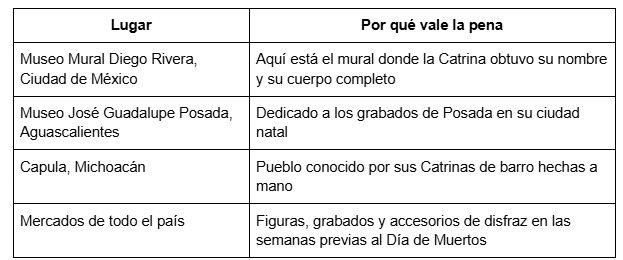
If your trip centers on the Caribbean coast, you won't need to travel that far. Markets in Cancún and Playa del Carmen fill with Catrina figures and papel picado in October. Our post on the history of papel picado explains the cut-paper banners you'll see beside them.
Celebrating With La Catrina on Your Trip
Late October and early November are a rewarding time to see La Catrina in her element. The real question is how you want to experience her.
A resort celebration is the easiest option. Face painting, costume contests and altars come to you, which is especially convenient with kids or on a short stay. Heading into town takes more planning but shows you how locals celebrate, from market stalls full of clay Catrinas to decorated storefronts and family altars. If you join a public procession or visit a cemetery, dress respectfully, give families space and ask before taking photos.
What this looks like in practice: A couple staying at Sandos Playacar in Playa del Carmen in early November spends a relaxed morning by the pool. In the afternoon, they walk into town and pick up a small clay Catrina at a local market as a souvenir. That evening, they get their faces painted at the resort's Day of the Dead celebration and join the festivities. They come home with a keepsake and a clear sense of who La Catrina is.
Final Thoughts on La Catrina
La Catrina has traveled a long way, from a cheap printed broadside to the most recognizable face of Day of the Dead. Knowing her story adds meaning to every hat, painted face and clay figure you see during the season. She isn't a spooky costume. She's a smiling reminder that life is worth celebrating because it doesn't last forever.
If you'd like to see La Catrina come to life during Día de Muertos, plan your trip for late October or early November. Explore Sandos resorts in Mexico to find a stay that combines beach time with the season's celebrations.
Frequently Asked Questions
Is La Catrina a real person?
No. She's a fictional character created by José Guadalupe Posada and developed by Diego Rivera. She represents death and social equality rather than any real woman.
Is La Catrina the same as a sugar skull?
Not exactly. Sugar skulls, or calaveras de azúcar, are decorated candy skulls placed on altars and given as gifts. La Catrina is a specific character, though her painted face often borrows the colorful sugar skull style.
Is it respectful for visitors to dress up as La Catrina?
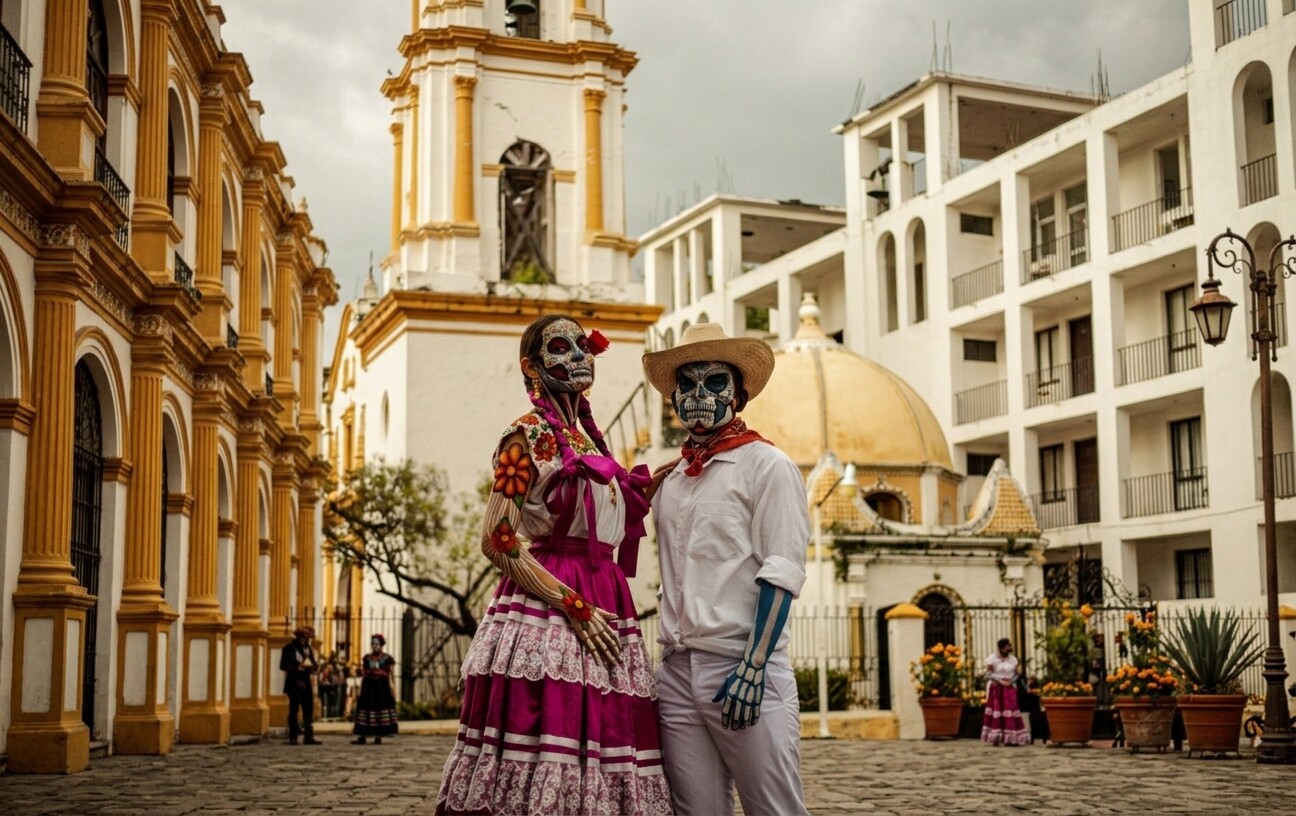
In Mexico, visitors dressing as La Catrina is generally welcomed, especially at public celebrations. What matters is approaching it with understanding, treating it as part of a meaningful holiday rather than just a Halloween costume.
What is a catrín?
A catrín is La Catrina's male counterpart, a skeleton dressed as an elegant gentleman in a suit and top hat. The word itself is Mexican slang for a dandy.
Why does La Catrina wear such a big hat?
The oversized hat comes from Posada's original print, where it mocked the extravagant European fashions of the early 1900s. Today it's usually decorated with flowers, often marigolds, and has become her signature feature.
When is La Catrina celebrated?
She appears throughout the Day of the Dead season, from late October through November 2. Many cities hold Catrina parades and events in the final week of October.