



Day of the Dead Flowers: Cempasúchil Meaning and Uses
The Day of the Dead flower (cempasúchil) is the bright orange Mexican marigold, Tagetes erecta, used to decorate altars and graves during Día de Muertos. Families believe its strong color and scent guide the souls of loved ones home, so they scatter its petals in paths leading to the ofrenda. Other traditional Day of the Dead flowers include deep red cockscomb and white baby's breath.
Day of the Dead flowers are everywhere in Mexico at the end of October. They're piled high in markets, woven into arches over altars and scattered in trails of orange petals from the street to the front door. The most important of them is cempasúchil, the Mexican marigold, and the reason it matters is part botany, part belief.
This guide explains what Day of the Dead flowers mean and why marigolds are the heart of the tradition. It also covers how families use them on the ofrenda and in cemeteries, and which other flowers appear alongside them. If you'd like to take part at home, you'll find tips for growing the flowers from seed and for making paper versions.
Cempasúchil: The Main Day of the Dead Flower
Cempasúchil is the Mexican name for Tagetes erecta, a marigold native to Mexico. In English, it's also called the Mexican marigold or Aztec marigold. The plant grows tall and upright, with dense, ruffled blooms in shades from lemon yellow to deep orange.
The name comes from the Nahuatl word cempōhualxōchitl, usually translated as "twenty flowers," which is often explained as a reference to the bloom's many layered petals. You'll also see it written as flor de cempasúchil, and it's sometimes called the flower of the dead.
Cempasúchil flowers through late summer and fall, so its peak falls naturally around Día de Muertos on November 1 and 2. Mexico's Ministry of Agriculture notes that cempasúchil is native to Mexico and one of the holiday's most traditional elements, alongside pan de muerto and sugar skulls.
Why Marigolds Are Used for Day of the Dead
The short answer is that marigolds are meant to be found. Families believe the souls of the dead return home once a year, and the flower helps them find the way. Its bright color is said to light their path, and its strong, earthy scent is said to lead them to the altar prepared in their honor.
The flower's ritual use predates the arrival of the Spanish. The Mexica (Aztecs) used cempasúchil in ceremonies and offerings. After the conquest, it became part of the blend of Indigenous and Catholic traditions that shaped the modern celebration.
That shared history is why marigolds for Day of the Dead are more than decoration. When you see an orange petal path leading to a door in early November, it's there for a specific visitor.
How Cempasúchil Is Used on the Ofrenda and at the Cemetery
Día de los Muertos flowers appear in a few recognizable ways:
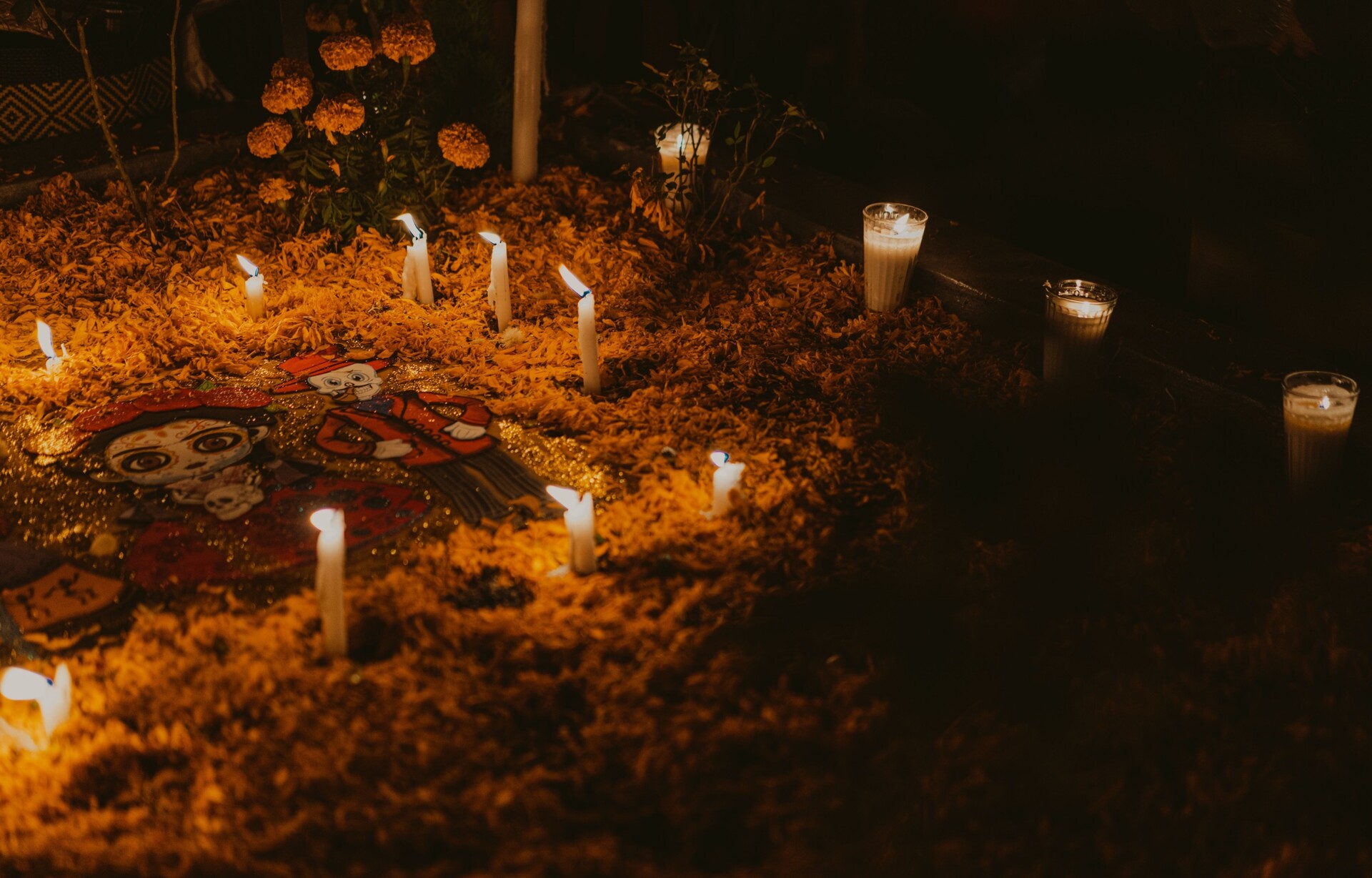
- Petal paths. Loose petals are scattered from the entrance of the home, or sometimes from the street, to the altar so the souls can follow them.
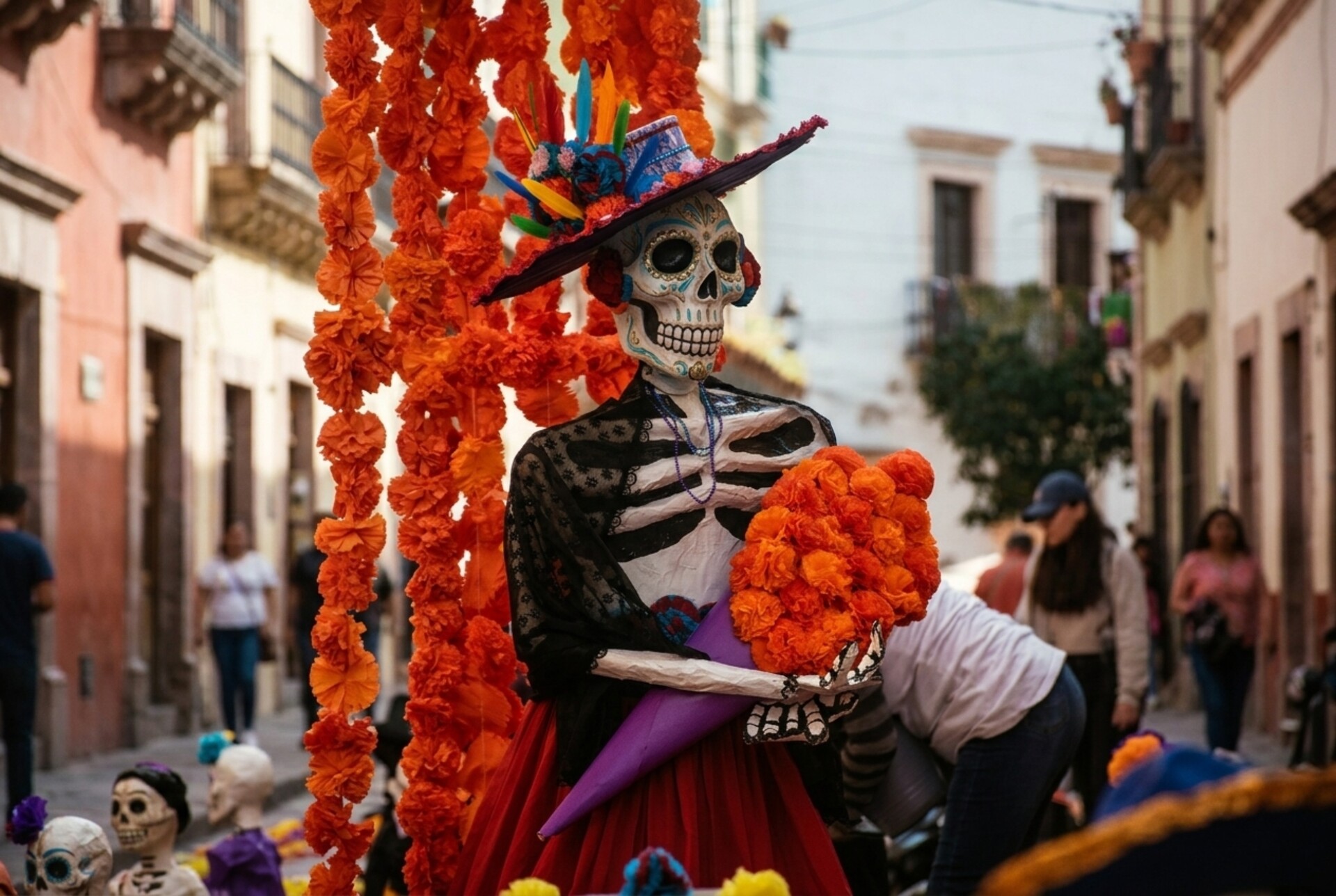
- Arches. A marigold arch frames the top of many ofrendas and is often described as a doorway between the worlds of the living and the dead.
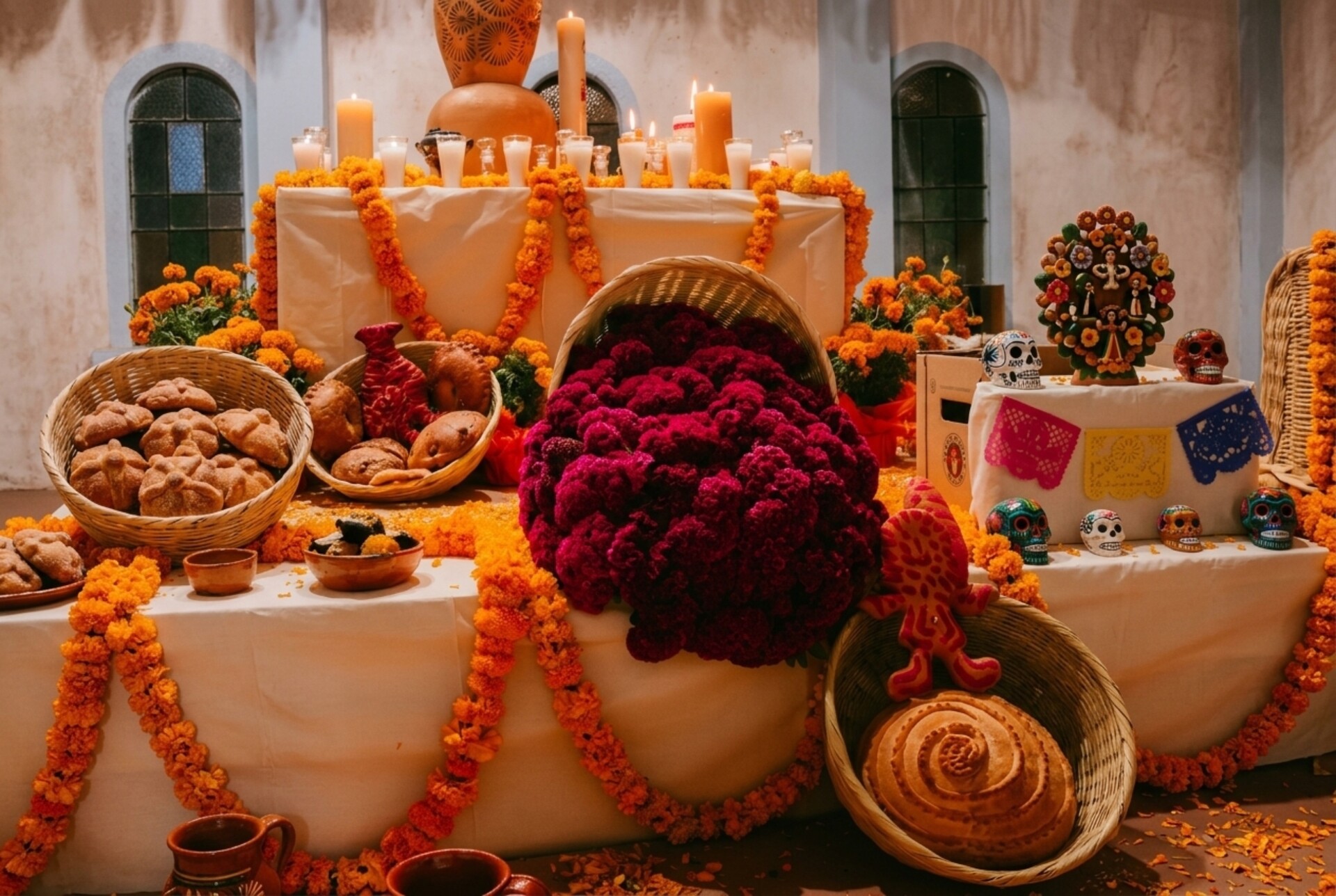
- Vases and garlands. Whole blooms fill vases on each level of the altar, and strings of flowers are draped along its edges.
Graves. Families clean and decorate the tombs of loved ones, often covering them with blooms or laying out petals in the shape of a cross.
If you're building your own altar, our guide on how to make a Day of the Dead altar at home explains what goes on each level. The history of papel picado covers the cut-paper banners that usually hang above the flowers.
Other Traditional Day of the Dead Flowers
Cempasúchil takes the lead, but it rarely appears alone. These are the flowers most often seen beside it:
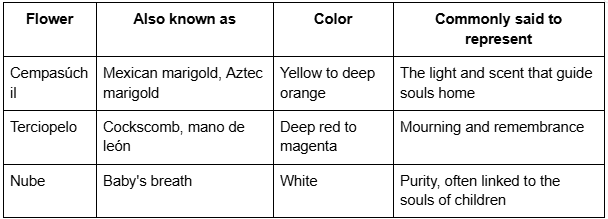
The terciopelo flower gets its name from the Spanish word for velvet, a nod to its soft, crested texture. Nube, meaning "cloud," is especially common on altars honoring children, who are remembered on November 1.
Where Mexico's Marigolds Grow
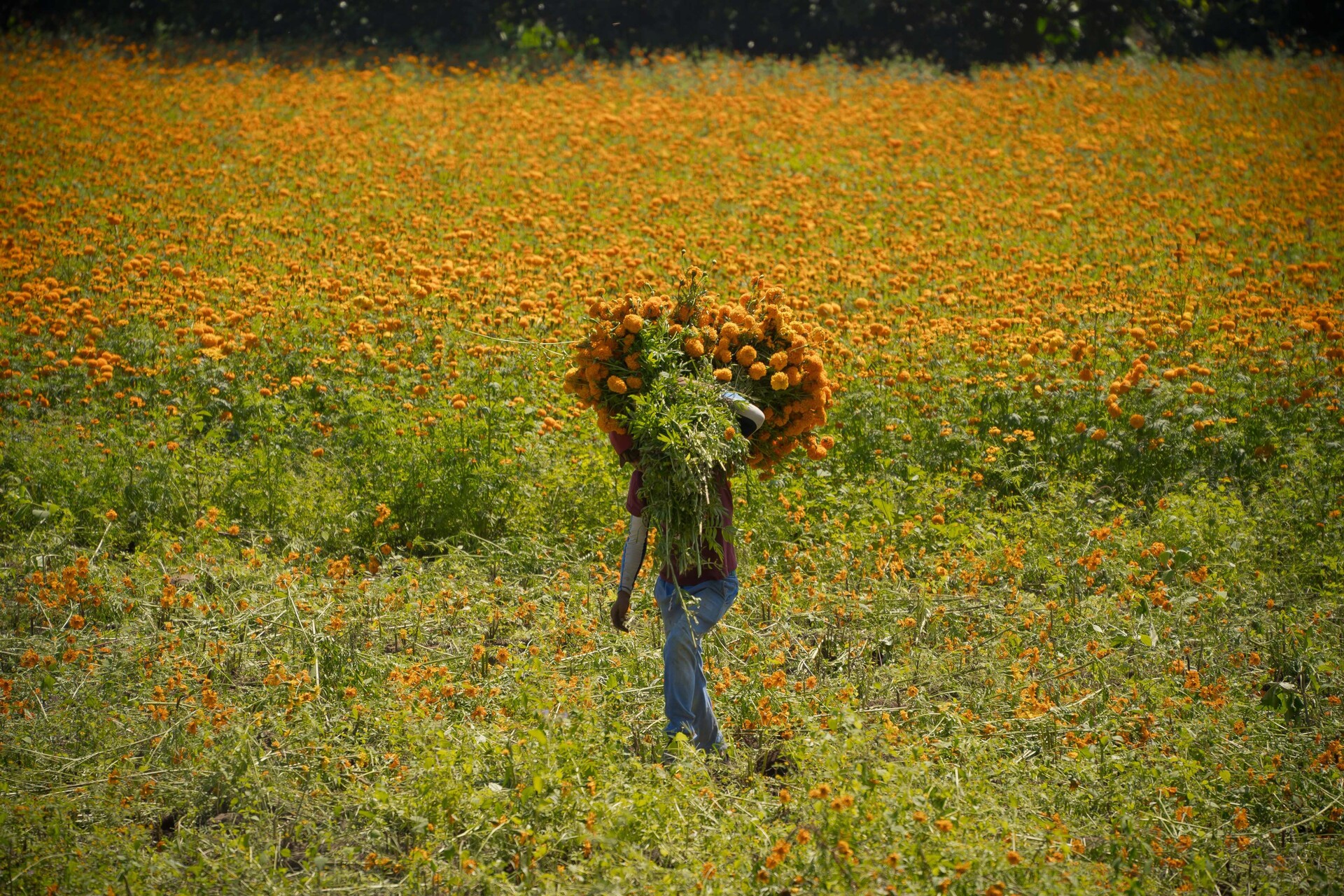
Most of Mexico's cempasúchil comes from the state of Puebla, which produces the large majority of the national crop. Around Atlixco, fields turn solid orange in October before the harvest is sent to markets across the country. Hidalgo, Tlaxcala, Guerrero and the Xochimilco area of Mexico City also grow it for the season.
In Mexican markets, the flowers are usually sold in large bundles during the last two weeks of October. Prices climb as November 1 gets closer.
How to Bring Day of the Dead Flowers Home
You don't need to be in Mexico to take part in the tradition. You can grow cempasúchil from seed or make paper flowers that last from year to year.
Growing Cempasúchil From Seed
Cempasúchil seeds are easy to find in the US, often sold as Aztec, African or Mexican marigolds. Despite the name, "African marigolds" are the same Mexican species, so look for Tagetes erecta on the packet.
- Sow seeds outdoors after the last frost, or start them indoors a few weeks earlier.
- Choose a spot with full sun and well-drained soil.
- Tall varieties can take around three months to bloom, so plant by early summer for flowers in late October.
Pinch off the growing tips of young plants to make them bushier and encourage more blooms.
Making Paper Marigolds
Paper marigolds are a simple family craft, and they last much longer than fresh flowers. To make one:
- Stack eight to ten squares of orange or yellow tissue paper.
- Fold the stack back and forth like a fan, with folds about an inch wide.
- Tie the middle tightly with a pipe cleaner or thin wire.
- Trim both ends into a rounded or fringed shape.
- Gently pull the layers apart, one sheet at a time, until the flower looks full.
Seeing the Marigolds on a Trip to Mexico
The weeks leading up to November 1 and 2 are a rewarding time to visit Mexico. Markets fill with flowers, altars appear in shops and hotel lobbies, and cemeteries come alive with families preparing for the celebration.
The main decision is how far you want to go to see it. Resort celebrations bring the holiday to you, with altars, face painting and traditional food, which makes them especially easy for families. Our Day of the Dead costume ideas can help you plan for the festivities. Local markets and cemeteries give you a closer look at how families actually observe the tradition, but they take more planning. If you visit a cemetery on November 1 or 2, keep your voice low, give families space and ask before taking photos.
What this looks like in practice: A family staying at Sandos Caracol Nature Resort at the end of October spends the mornings swimming in the resort's cenotes and relaxing on the beach. One afternoon, they head into Playa del Carmen to buy a bundle of cempasúchil at a local market. That evening, they add the flowers to the resort's Day of the Dead altar and join the celebration. The kids come home knowing why the petals are there, not just what they look like.
Final Thoughts on Day of the Dead Flowers
Of all the Day of the Dead flowers, cempasúchil is the most recognizable because it has a job to do. Its color and scent are meant to lead loved ones home, which turns a simple marigold into one of the most meaningful parts of the celebration. You can plant a few seeds, fold paper flowers with your kids or visit the markets yourself. Each is an easy way into one of Mexico's most important traditions.
If you'd like to experience Día de Muertos in person, plan your visit for late October or early November. Explore Sandos resorts in Mexico to find a stay with time for both the beach and the celebration.
Frequently Asked Questions
Can you eat cempasúchil?
The petals have traditional uses in teas and as a natural food coloring. However, flowers from florists and markets are often treated with pesticides, so only eat petals from plants grown for that purpose.
How long do cut marigolds last?
Fresh cempasúchil usually lasts about a week in a vase. Trim the stems, remove any leaves below the waterline and change the water every couple of days.
Are cempasúchil and regular garden marigolds the same?
They're related but not identical. Cempasúchil is Tagetes erecta, which grows tall with large blooms. The smaller French marigold is Tagetes patula, a different species in the same genus that also originated in the Americas.
Does cempasúchil come in colors other than orange?
Yes. Mexico has 35 registered varieties of cempasúchil, ranging from pale yellow to deep orange, and some are reddish or even white.
Do the flowers have to be real?
No. Many families use paper or silk marigolds, especially outside Mexico or when fresh flowers are hard to find. What matters most is the intention behind the ofrenda.
When should you put flowers on a Day of the Dead altar?
Most families set out fresh flowers in the last days of October so they look their best on November 1 and 2. Paper flowers can go up earlier.