



Howler Monkeys in the Riviera Maya | Where to See Them
Howler monkeys are one of two monkey species found in the Riviera Maya, recognized by their deep, roaring calls that echo through the jungle canopy. The Yucatán black howler (Alouatta pigra) is the species native to the region, and travelers can hear or see them at eco-conscious resorts like Sandos Caracol and Sandos Playacar, as well as at nature reserves like Punta Laguna.
If you've ever stayed at a resort in Playa del Carmen and heard a deep, rumbling roar rolling through the trees at dawn, you've already met the howler monkey, or at least heard one. These primates are among the loudest land animals on the planet, and the jungles of the Riviera Maya are one of the best places to encounter them in the wild. For many guests, waking up to the sound of howler monkeys is one of the most memorable parts of their trip.
The Riviera Maya is home to two monkey species: the spider monkey and the howler monkey. While spider monkeys tend to get more attention for their acrobatic tree swinging, howler monkeys have their own appeal. They also have a much bigger voice.
What Makes Howler Monkeys So Loud?
Howler monkeys produce their famous calls using an enlarged hyoid bone at the base of their throat. This hollow, shell-like bone acts as a natural amplifier, allowing their vocalizations to carry up to 3 miles through dense jungle and even farther across open areas. Males are responsible for the loudest howling, typically at dawn and dusk.
The purpose of all that noise is practical. Howler monkeys use their calls to communicate territory boundaries to neighboring troops, reducing the need for physical confrontation. Since their leaf-heavy diet provides relatively low energy, avoiding unnecessary movement is a survival strategy. Howling lets them say "we're here, stay away" without getting up from their branch.
The Yucatán Black Howler Monkey
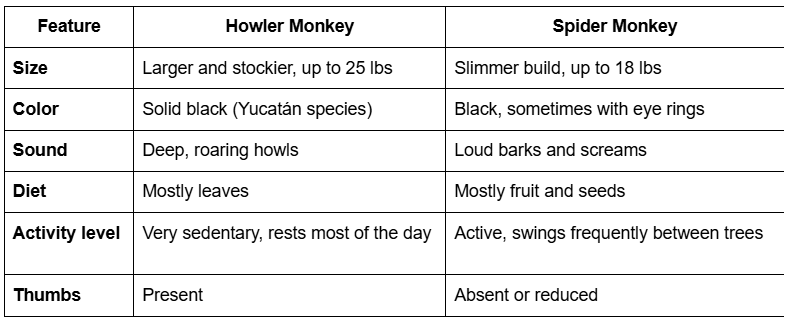
The howler monkey species native to the Yucatán Peninsula is the Yucatán black howler (Alouatta pigra), also called the Mexican black howler or Guatemalan black howler. It's the largest howler monkey species and one of the biggest New World monkeys overall. Males average around 11.4 kg (about 25 lbs), while females are smaller at roughly 6.4 kg (14 lbs). Both sexes have long, solid black fur and strong prehensile tails they use like a fifth limb to grip branches.
This species is found only in southeastern Mexico, northern Guatemala, and Belize, a relatively small range compared to other howler monkeys. The IUCN classifies the Yucatán black howler as endangered, with populations expected to decline significantly over the coming decades due to habitat loss, hunting, and capture for the illegal pet trade. Sandos has long been a leader in animal welfare and opposing wildlife exploitation, making responsible tourism a core part of its identity.
That endangered status makes responsible wildlife tourism especially meaningful. When resorts and reserves protect the jungle canopy these monkeys depend on, it directly supports their long-term survival.
Howler Monkeys vs. Spider Monkeys
Both species share the Riviera Maya jungle, but they're easy to tell apart once you know what to look for.
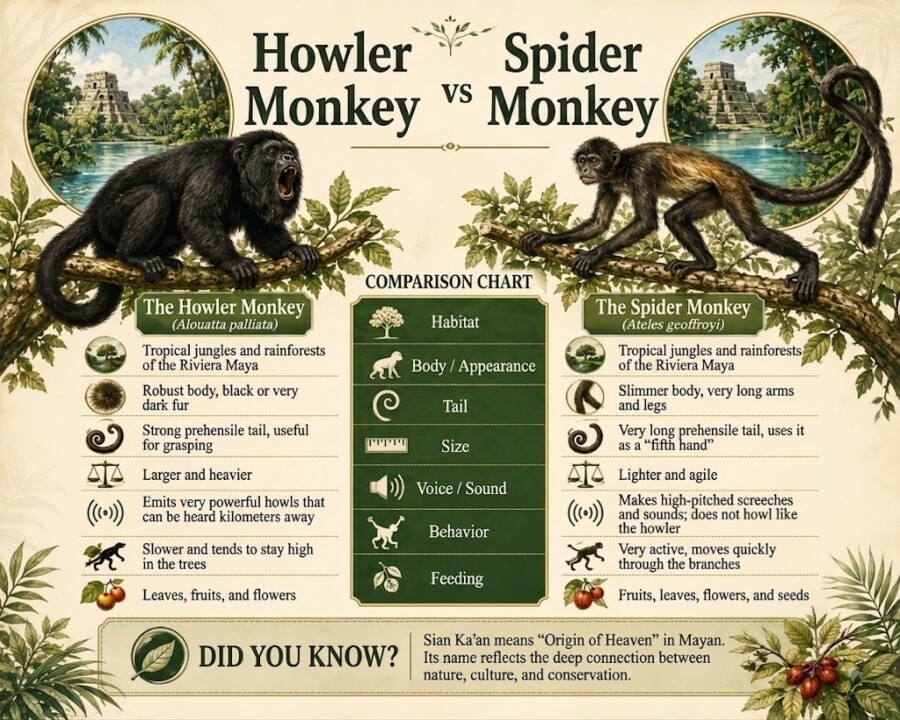
Spider monkeys are the ones you're more likely to see swinging playfully near resort walkways. Howler monkeys tend to stay higher in the canopy and move less, but their calls make up for any lack of visibility.
To learn more about their more acrobatic cousins, read our full guide to spider monkeys in the Riviera Maya.
What Do Howler Monkeys Eat?
Howler monkeys are primarily folivores, meaning leaves make up the largest share of their diet. Leaves can account for 50% to 75% of what they eat. They also consume fruit, flowers, buds, and nuts when available. They are selective feeders, preferring young leaves that contain fewer toxins and more nutrients than mature foliage.
Because leaves provide relatively little energy, howler monkeys spend a remarkable amount of time resting. They can be inactive for up to 70–80% of the day, conserving calories between feeding sessions. This sedentary lifestyle is one reason they're sometimes compared to sloths, though they're far more vocal about their territory.
Interestingly, howler monkeys have full three-color vision, which is unusual among New World monkeys. Scientists believe this helps them distinguish younger, more nutritious leaves (which tend to be reddish) from older, tougher foliage.
Where to See Howler Monkeys in the Riviera Maya
Not every resort or beach area in the region offers howler monkey sightings. Cancún's Hotel Zone, for example, has very little remaining jungle habitat and almost no monkey activity. To see or hear howler monkeys, you'll want to be in the right setting.
Punta Laguna Nature Reserve
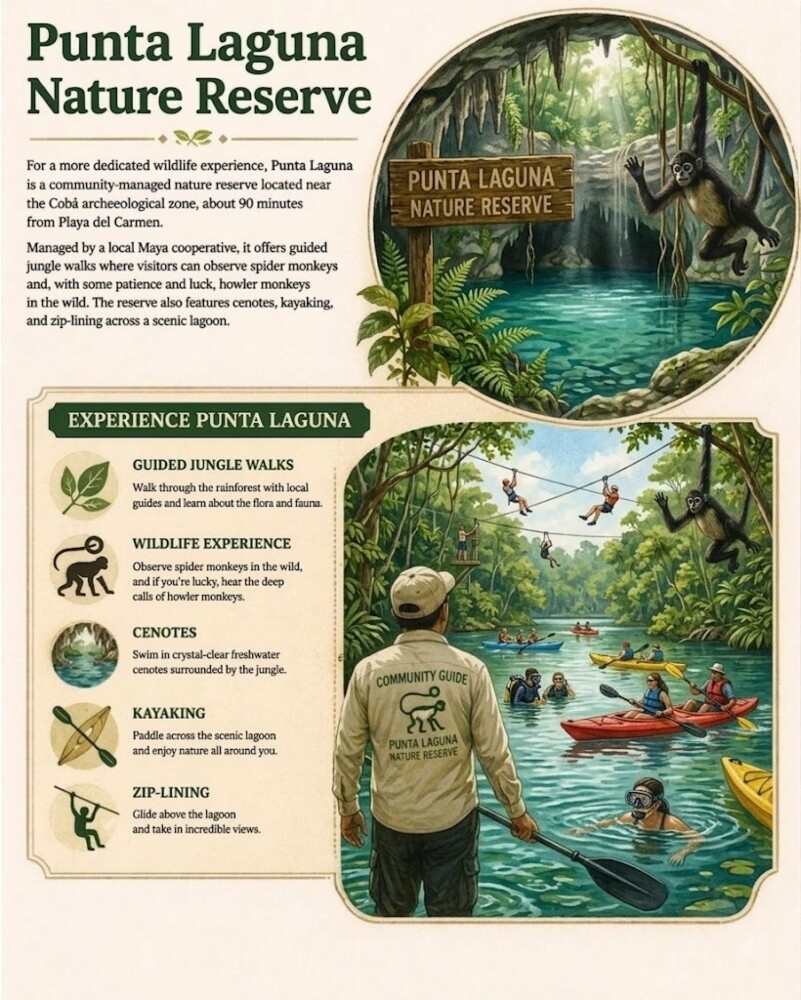
For a more dedicated wildlife experience, Punta Laguna is a community-managed nature reserve located near the Cobá archaeological zone, about 90 minutes from Playa del Carmen. Managed by a local Maya cooperative, it offers guided jungle walks where visitors can observe spider monkeys and, with some patience and luck, howler monkeys in the wild. The reserve also features cenotes, kayaking, and zip-lining across a scenic lagoon.
Sian Ka'an Biosphere Reserve
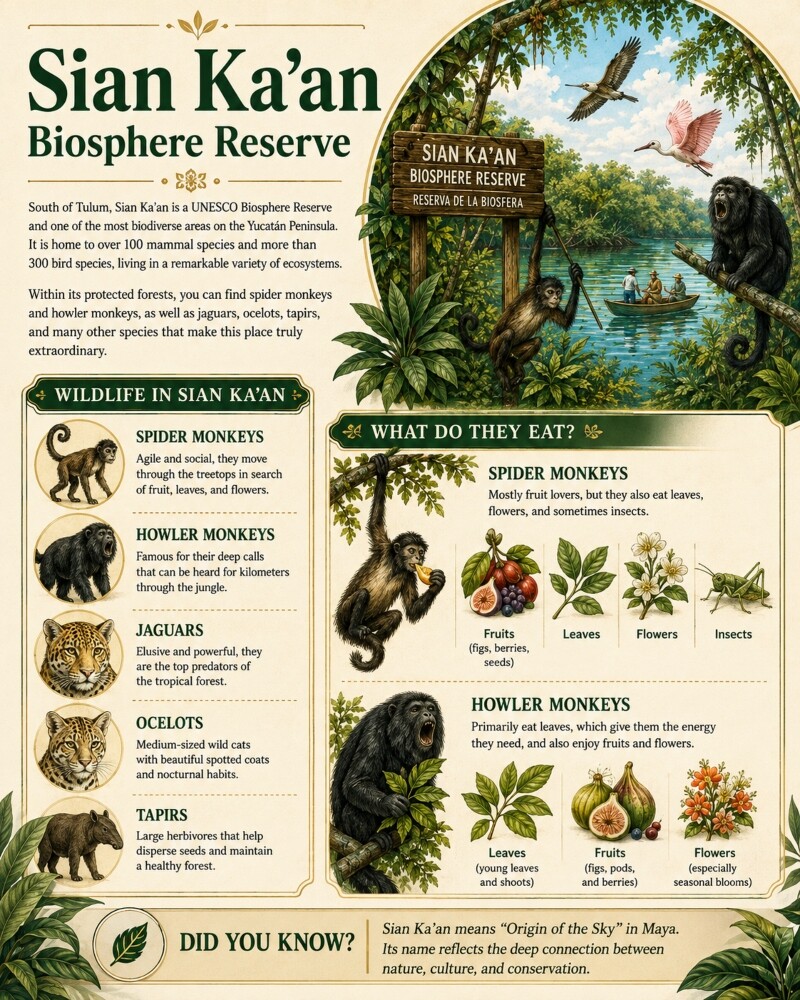
The Sian Ka'an UNESCO Biosphere Reserve south of Tulum is one of the most biodiverse areas on the Yucatán Peninsula, home to over 100 mammal species and more than 300 bird species. Both spider monkeys and howler monkeys live within its protected forests, alongside jaguars, ocelots, tapirs, and other wildlife.
At Sandos Resorts
Guests at Sandos Playacar regularly hear and see howler monkeys in the trees near the spa area. The resort's location within the Playacar development in Playa del Carmen means it borders enough natural canopy for troops to move through. If you're traveling with children, the resort is also one of the best bases for family activities in Playa del Carmen.
At Sandos Caracol Eco Resort, the jungle setting is even more immersive. The resort's All-Nature Experience program includes eco-tours, natural cenotes, and river activities that put guests in close contact with the surrounding ecosystem. This includes resident wildlife like monkeys, coatis, agoutis, and iguanas. Sandos Caracol's approach to Mexican culture and eco experiences means the jungle habitat is actively preserved rather than cleared.
How to Observe Howler Monkeys Responsibly
Whether you encounter howler monkeys at a resort or in a nature reserve, a few guidelines help keep both you and the animals safe:
Never feed them. Human food can harm their digestive systems, and feeding encourages risky behavior around people.
Keep your distance. Males can become territorial, and mothers are protective of their young. A respectful viewing distance is best.
Stay quiet and patient. Howler monkeys are most active at dawn and late afternoon. If you're an early riser, the pre-breakfast hours are your best window.
Secure your balcony. At jungle-adjacent resorts, keep doors and windows closed when you leave your room. Monkeys are curious and may investigate if given the opportunity.
Don't try to provoke howling. Let them vocalize on their own terms.
Why Black Howler Monkey Conservation Matters
The Yucatán black howler monkey faces real pressure from deforestation, agricultural expansion, and illegal capture. The species' relatively small geographic range, limited to parts of Mexico, Belize, and Guatemala, makes it particularly vulnerable to habitat fragmentation. When forest patches become too small or too isolated, troops struggle to find food, face stress from overcrowding, and lose genetic diversity.
Ecotourism plays a real role in protecting these animals. Reserves like Punta Laguna are managed by local Maya communities who depend on sustainable tourism to fund conservation efforts. Eco-conscious resorts contribute by preserving jungle corridors and educating guests about wildlife that lives on and around their properties.
What this looks like in practice: A family staying at Sandos Caracol might spend the morning on an eco-tour through the resort's jungle trails, spotting coatis and listening for howler calls in the treetops. In the afternoon, the kids head to the Aquapark while the parents relax by the cenote. The wildlife sighting becomes a highlight of the trip. The resort's decision to preserve the surrounding jungle rather than clear it is what makes that moment possible.
Resort Convenience vs. Off-Property Exploration
Seeing howler monkeys at your resort is convenient and requires no planning. All it takes is good timing and a little luck. But a day trip to Punta Laguna or Sian Ka'an offers a deeper experience with trained local guides, better chances of close observation, and a direct way to support community conservation programs.
If you have a full week in the Riviera Maya, doing both makes sense. Enjoy the on-property wildlife at Sandos during the first few days, then plan a guided excursion midweek when you're ready for more adventure. The Riviera Maya's jungles also support an impressive variety of tropical bird species worth watching for alongside the monkeys. Either way, your stay in the region supports the ecosystem that keeps these animals thriving.
Plan Your Eco-Friendly Stay
The Riviera Maya offers something rare: the chance to relax on Caribbean beaches and encounter endangered primates in the same trip. Whether you hear howler monkeys from your balcony at Sandos Playacar or trek through the jungle near Cobá, the experience adds a dimension to your vacation that a poolside afternoon alone can't match. For couples or adults looking for a more refined stay, the new Platinum Tower at Sandos Playacar offers beachfront luxury just steps from the jungle canopy where howlers roam. Explore Sandos Caracol Eco Resort to plan a stay that puts you closer to the region's most remarkable wildlife.
Frequently Asked Questions about Howler Monkeys
How big are howler monkey troops in the Riviera Maya?
Yucatán black howler monkeys typically live in groups of 2 to 10 individuals, though troops of up to 16 have been documented. A typical group includes one or two adult males, several females, and their young. You're more likely to hear an entire troop calling together than to see all the members at once, since they often spread out across the canopy.
Do howler monkeys come down from the trees?
Rarely. Howler monkeys are almost entirely arboreal and spend the vast majority of their lives in the upper canopy. They descend to the ground only in unusual circumstances, such as during severe dry spells when they need to find water sources below the treetops. If you spot one on a walkway or low branch, keep your distance and let it return to the canopy on its own.
Can I bring kids on a howler monkey excursion?
Yes. Punta Laguna and similar reserves welcome families. The guided walks are moderate in difficulty, and children tend to enjoy the experience, especially the kayaking, cenote swimming, and zip-lining that many reserves offer alongside the wildlife viewing. Just bring comfortable shoes, insect repellent, and binoculars for younger kids who may have trouble spotting monkeys high in the trees.
What should I do if a howler monkey approaches my room or balcony?
Stay calm and do not corner the animal. Avoid making sudden movements or loud noises, and never offer food. If the monkey is on your balcony, step back inside and give it space to leave on its own. You can contact the front desk for help if needed. Keeping balcony doors closed when you're not in the room is the best prevention.
Do howler monkeys live alongside other wildlife in the Riviera Maya?
Yes. The jungle canopy that supports howler monkeys is also home to coatis, agoutis, iguanas, toucans, parrots, and even more elusive species like ocelots and margays. At eco-resorts and nature reserves, it's common to spot several different species during a single outing. The same forest protection that benefits howler monkeys supports the broader ecosystem.
What is the best month to visit the Riviera Maya for wildlife sightings?
Howler monkeys are present year-round, so there's no single best month. However, the dry season (November through April) tends to make wildlife easier to spot because the foliage thins slightly and animals move more predictably between water sources. The trade-off is that the dry season overlaps with peak tourist season, so popular reserves like Punta Laguna may be busier.
Are there mantled howler monkeys in the Riviera Maya too?
The native howler species on the Yucatán Peninsula is the Yucatán black howler. However, a group of mantled howler monkeys, a species originally from the Veracruz region, was released into the Playacar area of Playa del Carmen over two decades ago after being confiscated by authorities. That introduced population has grown over time, and local wildlife agencies have been working on plans to relocate them back to their original habitat in Veracruz.