



Cacao in Mexico: Maya History and Where to Taste It
Cacao is the raw, minimally processed seed of the Theobroma cacao tree, and in the Riviera Maya it carries a history that goes back thousands of years before chocolate as most people know it. Ancient Maya communities in this region used cacao as currency, medicine, and a ceremonial drink, and travelers today can still taste it in local dishes, spa treatments, and chocolate-making experiences around Playa del Carmen.
For travelers exploring Playa del Carmen and the surrounding jungle, cacao isn't just a food trend. It's one of the oldest cultural threads in the region, tied directly to the Maya civilization that built the ruins, cenotes, and traditions still visible across the Yucatán Peninsula today. Understanding what cacao actually is, and where it fits into a Riviera Maya trip, makes the experience richer than simply ordering a hot chocolate at breakfast.
What Is Cacao, Exactly?
Cacao comes from the pod of the Theobroma cacao tree, a small evergreen that grows in the tropical shade of jungles like the ones surrounding Playa del Carmen. Each pod holds 30 to 40 seeds, or beans, surrounded by a sweet, white pulp. Botanically, the cacao pod is a fruit. Once harvested, the beans are fermented, dried, and sometimes roasted at low temperatures, then cracked into what's sold as cacao nibs or ground into cacao powder.
This is the key distinction travelers often miss: cacao refers to the bean in its rawest form, while chocolate is the finished, processed product made from it, usually with added sugar, milk, or fat.
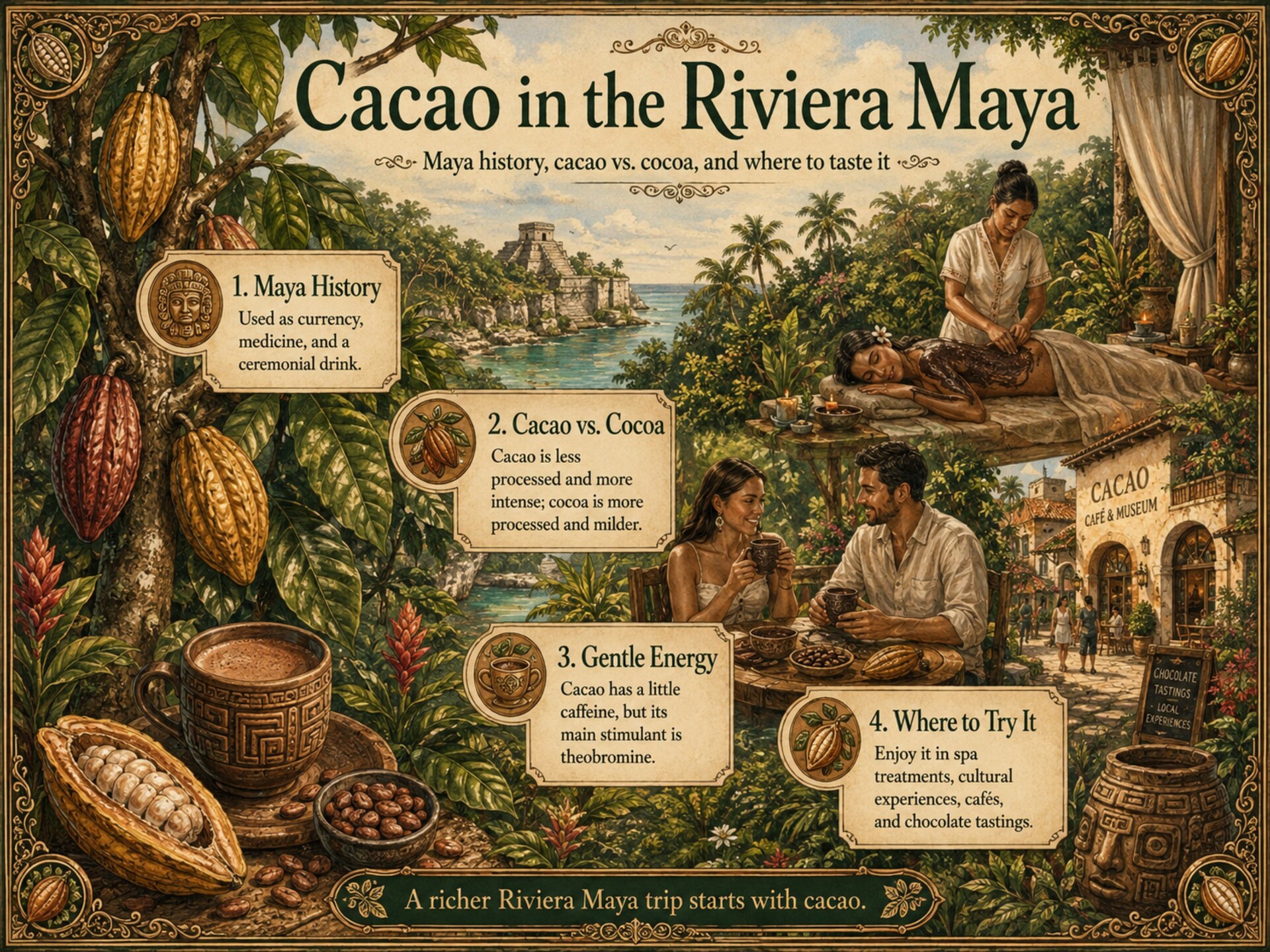
Cacao Powder vs. Cocoa Powder
The two terms get used interchangeably, but they aren't quite the same thing.
- Cacao powder is made from beans fermented and roasted at lower temperatures, which preserves more of the bean's natural compounds and gives it a sharper, more bitter flavor.
- Cocoa powder goes through higher-heat processing and is often treated with alkali (a step called "Dutching") to soften the flavor and darken the color, which is why it tastes milder and blends more easily into baked goods and drinks.
Neither is inherently better. Cacao powder is closer to how the Maya would have prepared it, while cocoa powder is the more common choice in modern kitchens and commercial chocolate.
Does Cacao Have Caffeine?
Cacao contains a small amount of caffeine, but its dominant stimulant is theobromine, a related compound that produces a gentler, longer-lasting energy lift without the sharp crash associated with coffee. A cup of traditional cacao drink typically has far less caffeine than a cup of coffee, which is part of why it was used in Maya rituals meant to last for hours rather than a quick jolt before work.
The Maya History of Cacao in the Riviera Maya
Long before Playa del Carmen became a resort destination, this stretch of coastline sat within Maya trade routes where cacao beans functioned as both a sacred substance and a form of currency. According to research on cacao use among the prehispanic Maya, Maya rulers collected cacao beans as tribute and used them as a form of money, and colonial-era records describe cacao's role in coming-of-age rituals. Cacao pods and beans appear repeatedly in Maya codices and ceramics from the region, usually connected to gods of sustenance and abundance rather than treated as an everyday snack.
That history is still visible in the Riviera Maya today, in the jungle that surrounds resorts like Sandos Caracol, in the cenotes the Maya considered sacred water sources, and in cultural shows that recreate pre-Hispanic ceremonies for travelers who want more than a beach day.
Health Benefits of Cacao Travelers Ask About
Raw cacao is often described as more nutrient-dense than heavily processed chocolate, largely because less processing means fewer of the bean's natural compounds are stripped away. Cacao is commonly cited as a source of:
- Flavanols, plant compounds linked to healthy circulation
- Magnesium and iron, both present in meaningful amounts in raw cacao
- Mood-supporting compounds, including small amounts of naturally occurring mood-related chemicals
These points are worth keeping in perspective. A spa treatment or a cup of traditional cacao on vacation is a nice addition to a trip, not a substitute for medical advice, and travelers with specific health conditions should check with a doctor before treating cacao as a supplement.
Where to Try Cacao in the Riviera Maya
Cacao shows up in more places around Playa del Carmen than most first-time travelers expect.
On property at Sandos Caracol, the open-air jungle spa uses natural ingredients, including cacao, honey, and aloe vera, in several of its treatments, and the resort's Teatro del Pueblo program features a Pre-Hispanic "Sacred Fire" show that draws directly on Maya tradition. A guided jungle and mangrove walk covers Maya myths and local plant life, including the role cacao played in the region long before hotels arrived.
Just outside the resort, downtown Playa del Carmen has a handful of spots where cacao takes center stage rather than a supporting role. Ah Cacao Chocolate Café, a Playa del Carmen original, sells drinking chocolate and confections made from cacao sourced within Mexico. The Choco-Story Chocolate Museum walks visitors through cacao's journey from Maya ritual object to modern chocolate bar, with tastings included.
What this looks like in practice: A couple staying at Sandos Caracol books an afternoon spa treatment that uses cacao and honey, then takes an evening taxi into Playa del Carmen for dinner. Before heading back, they stop by Ah Cacao for drinking chocolate and pick up a bag of cacao nibs to bring home. It's a low-effort way to experience cacao twice in one day, once through the resort's own program and once through a local business, without building an entire day around it.
Choosing between an on-property cacao experience and a trip into town comes down to how much of the day you want to spend in transit. The spa treatment and cultural show at Sandos Caracol require no planning and no travel time, while the café and museum give a more hands-on look at cacao's history but mean carving out a few hours away from the resort. Neither choice is wrong. It depends on whether the priority for that day is relaxation or exploration.
Final Thought
Cacao is easy to overlook on a beach vacation, tucked into a spa menu or a breakfast buffet without much explanation. But in the Riviera Maya, it's one of the more direct ways to connect with the region's Maya roots, whether that means a cacao-infused massage after a morning at the cenote or a short trip into Playa del Carmen for a proper tasting. Either way, it's worth setting aside a little time for it during the trip, rather than treating it as an afterthought.
Explore the All Nature Experience at Sandos Caracol to see how Maya culture and the surrounding jungle fit into a stay built around more than the beach.
Frequently Asked Questions
Is cacao the same thing as chocolate? No. Cacao is the raw or minimally processed bean, while chocolate is the finished product made by combining processed cacao with sugar, milk, or fat.
Can I drink traditional Maya-style cacao in the Riviera Maya? Yes. Some spas and cultural experiences in the region, including treatments at Sandos Caracol, incorporate cacao, and cafés in Playa del Carmen serve drinking chocolate made closer to traditional preparations, often with less sugar than commercial hot chocolate.
Is cacao powder healthier than cocoa powder? Cacao powder generally retains more of the bean's natural compounds because it's processed at lower temperatures, but both can fit into a balanced diet. The difference is more about processing than one being universally "healthier."
How much caffeine is in cacao compared to coffee? Cacao has noticeably less caffeine than coffee. Most of its stimulant effect comes from theobromine, which produces a milder, longer energy lift rather than a quick spike.
Where can I buy real cacao products near Playa del Carmen? Ah Cacao Chocolate Café in downtown Playa del Carmen sells cacao-based drinks and confections, and the Choco-Story Chocolate Museum offers tastings alongside its exhibits on cacao's Maya history.
Do cacao nibs need to be cooked before eating? No. Cacao nibs are typically eaten raw or lightly roasted, straight from the package or sprinkled over food, and don't require additional cooking.
Plan your stay at Sandos Caracol and build in time to explore the jungle, cenotes, and Maya traditions that surround the resort, cacao included.