



25 Birds You Can See in Playa del Carmen
Playa del Carmen and the surrounding Riviera Maya are home to more than 500 bird species, making the region one of the most rewarding birdwatching destinations in Mexico. From colorful toucans in the jungle to frigatebirds along the coast, you can spot a remarkable variety of birds year-round many right from your resort or on short day trips.
A Birdwatcher's Introduction to Playa del Carmen
You don't have to be a serious birder to appreciate the wildlife around Playa del Carmen. The Yucatán Peninsula sits along the Central Americas Flyway, a major migratory corridor that draws species from across North and South America throughout the year. Resident tropical birds stay year-round, while migratory visitors arrive in the cooler months, roughly October through March.
The variety here is genuinely impressive. Walk through any patch of jungle, visit a cenote, or stroll a coastal mangrove, and you're likely to encounter something colorful, unusual, or simply striking. This guide covers 25 birds in Playa del Carmen and its surroundings that travelers commonly see along with where to look for each one. If you're also planning time in the Cancún area, our birdwatching guide for Cancún covers the top spots and species further north along the coast.
If you're staying at Sandos Caracol Nature Resort & Waterpark, one of the most ecologically rich all-inclusive resorts in the Riviera Maya, the jungle and cenote system on the property give you a real head start.
Coastal and Water Birds
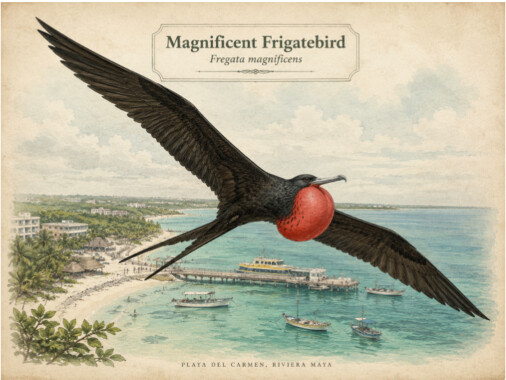
1. Magnificent Frigatebird (Fregata magnificens)
Hard to miss along the coast, the frigatebird soars effortlessly on long, angular wings. Males have a red throat pouch they inflate during breeding season. Look for them gliding above the ferry pier or fishing boats near the shore.
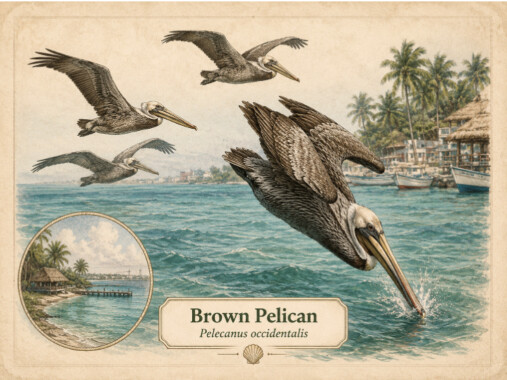
2. Brown Pelican (Pelecanus occidentalis)
A familiar sight from almost any beach on the Riviera Maya. Brown pelicans fly low over the water in formation and dive headfirst to catch fish. They often gather near the fishing areas north of Playa del Carmen.
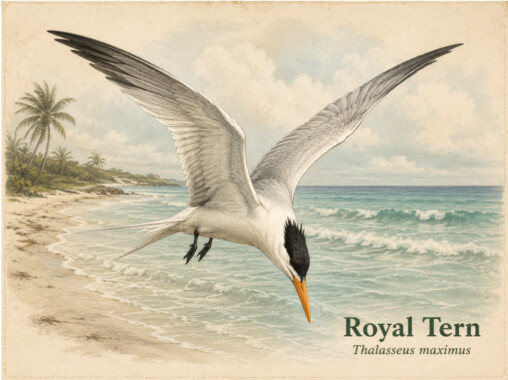
3. Royal Tern (Thalasseus maximus)
Sleek and fast, the royal tern has an orange bill and a distinctive black cap. It hovers above the surf before diving cleanly into the water. You'll find them on most Caribbean beaches in the area.
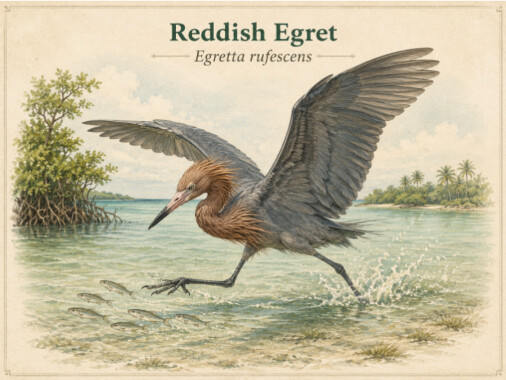
4. Reddish Egret (Egretta rufescens)
One of the more theatrical hunters you'll encounter. The reddish egret runs and stumbles through the shallows with its wings spread wide, herding fish. Coastal lagoons and the shores of Isla Cozumel are good spots.
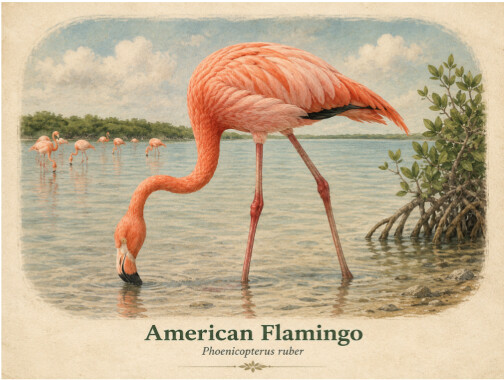
5. American Flamingo (Phoenicopterus ruber)
A short drive from Playa del Carmen, Celestún Biosphere Reserve and the flamingo colonies near Río Lagartos draw travelers specifically to see these striking pink birds feeding in shallow coastal lagoons. Coloring ranges from pale pink to deep coral depending on age and diet.
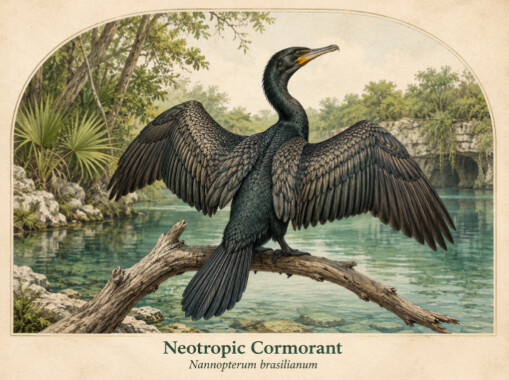
6. Neotropic Cormorant (Nannopterum brasilianum)
Smaller than the double-crested cormorant, this species is common on rivers, cenotes, and coastal areas throughout the Yucatán. You'll often see them perched on low branches drying their wings after a dive.
Jungle and Forest Birds
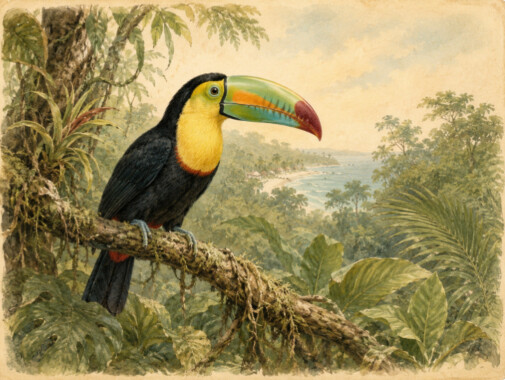
7. Keel-billed Toucan (Ramphastos sulfuratus)
The toucan most people picture, large rainbow-colored bill, glossy black body, and a yellow chest. They're present in forested areas around Playa del Carmen and are one of the most exciting sightings for first-time visitors. Listen for their loud, frog-like call.
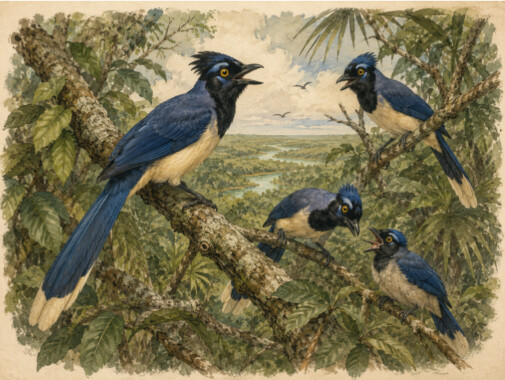
8. Yucatán Jay (Cyanocorax yucatanicus)
Endemic to the Yucatán Peninsula, this jay has a vivid blue and black plumage with a yellow ring around the eye. It moves in noisy family groups through the forest canopy. Sian Ka'an Biosphere Reserve is an excellent place to find them.
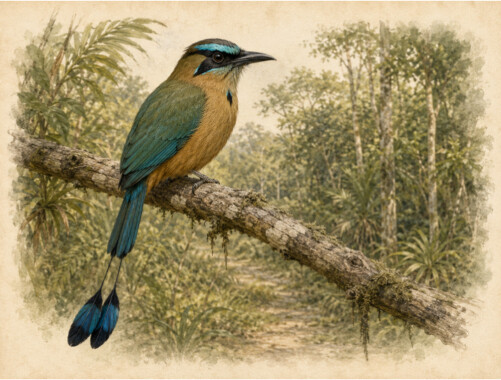
9. Turquoise-browed Motmot (Eumomota superciliosa)
The national bird of both El Salvador and Nicaragua, this motmot is a Mesoamerican icon. It has a brilliant turquoise stripe above the eye and a distinctive racquet-shaped tail it swings pendulum-style while perching. Common in the forests of the Riviera Maya.
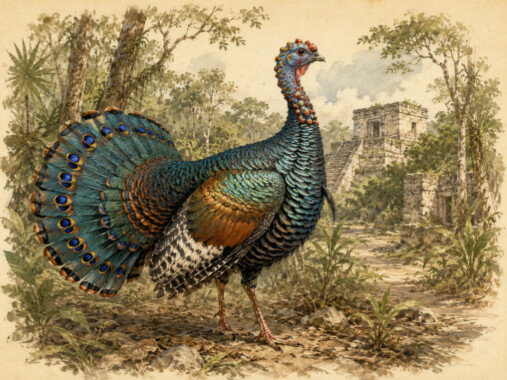
10. Ocellated Turkey (Meleagris ocellata)
One of the most spectacular birds on the peninsula. Unlike the North American wild turkey, the ocellated turkey has iridescent blue-green plumage and brilliantly colored tail spots. They inhabit lowland forests near archaeological sites like Cobá and Tulum.
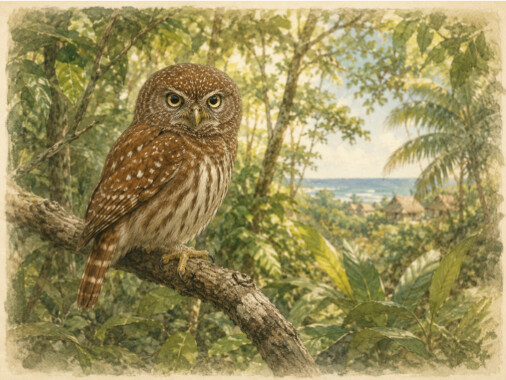
11. Ferruginous Pygmy-Owl (Glaucidium brasilianum)
Despite being active during the day unusual for an owl this small owl is often heard before it's seen. Its repetitive whistling call carries through the forest. It's commonly seen in the jungle areas around Playa del Carmen's eco-resorts.
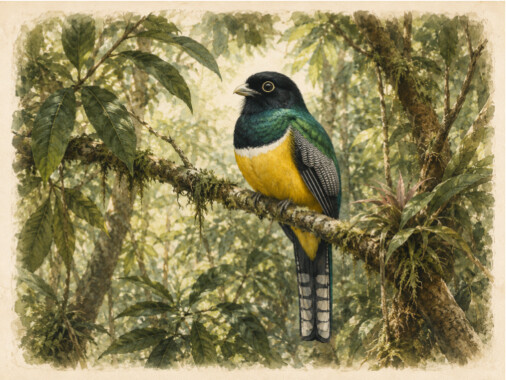
12. Black-headed Trogon (Trogon melanocephalus)
Related to the famous resplendent quetzal, this trogon has a yellow belly, white chest bar, and iridescent green back. It sits motionless for long stretches in mid-canopy shade, making it a challenge to spot until you know what to look for.
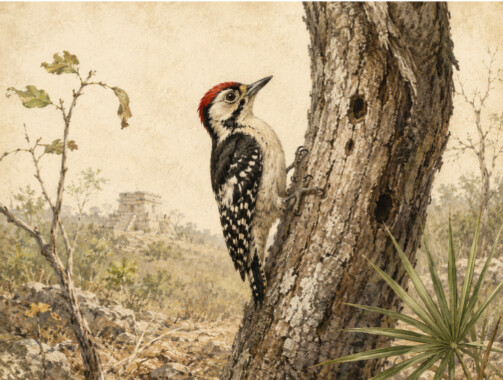
13. Yucatán Woodpecker (Melanerpes pygmaeus)
Another species found only on the Yucatán Peninsula. Smaller than most woodpeckers, it favors dry forest and scrubby vegetation. The male has a red cap that makes it relatively easy to identify.
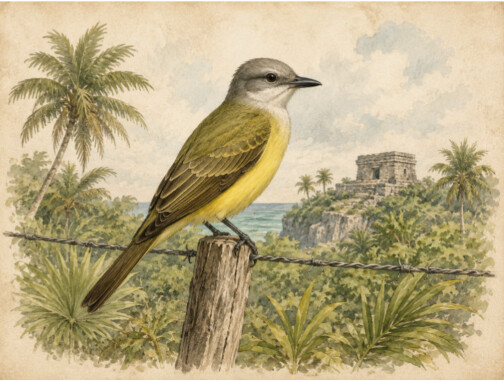
14. Tropical Kingbird (Tyrannus melancholicus)
One of the most common and visible birds in the area. This large flycatcher sits exposed on wires, fence posts, or treetops and makes a distinctive trilling call. Its olive-green and yellow plumage is easy to recognize once you've seen it once.
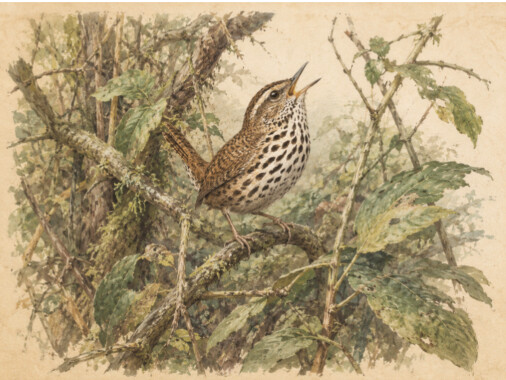
15. Spot-breasted Wren (Pheugopedius maculipectus)
A secretive forest bird with a loud, melodic song that far outweighs its small size. Found in thickets and dense vegetation throughout the region. You'll likely hear this one long before you see it.
The same jungle habitat that shelters these forest birds is also home to other remarkable wildlife. Spider monkeys in the Riviera Maya are regularly spotted in the canopy alongside toucans and trogons, early morning walks give you the best chance of encountering both.
Garden, Resort, and Urban Birds
Many birds in Playa del Carmen are found right in resort gardens and along the walkways between buildings. These species adapt well to landscaped environments and are often the first birds a traveler notices. For a broader look at the wildlife you might encounter during your stay, see our guide to 12 animals you'll see at Sandos.
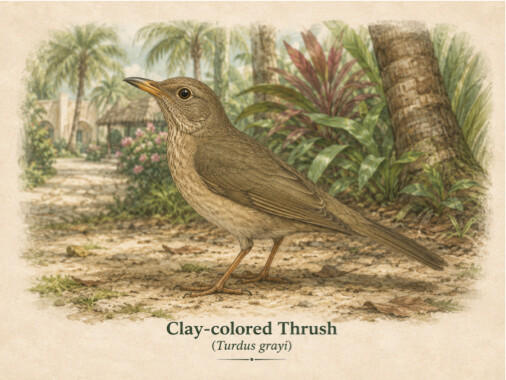
16. Clay-colored Thrush (Turdus grayi)
Mexico's most widespread thrush, and the national bird of Costa Rica. It has olive-brown plumage and a soft yellow bill. It forages on the ground beneath trees and sings a rich, rolling song at dawn and dusk.
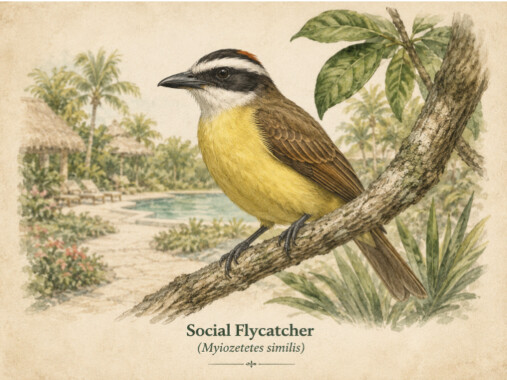
17. Social Flycatcher (Myiozetetes similis)
Named for its habit of nesting and feeding in groups, the social flycatcher is a bold little bird with a bright yellow belly and rust-red crown patch hidden beneath plain brown feathers. It's commonly seen around resort pools and gardens.
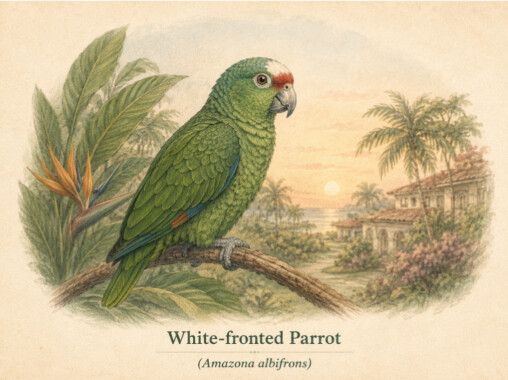
18. White-fronted Parrot (Amazona albifrons)
Small green parrots with a white and red patch on the forehead. They fly fast and straight in noisy pairs or small flocks, often visible at dawn when they move between roost sites and feeding areas. A daily resort sighting for many guests.
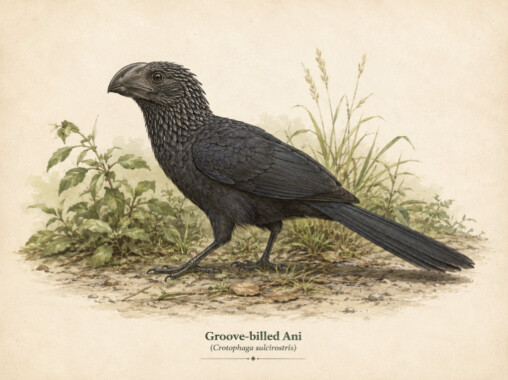
19. Groove-billed Ani (Crotophaga sulcirostris)
An odd-looking black bird with a laterally compressed bill. Anis are communal nesters and move together in groups through low scrub. They're easy to find near wooded areas on resort grounds and roadside vegetation.
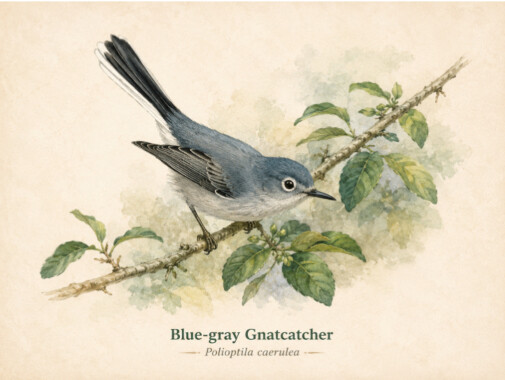
20. Blue-gray Gnatcatcher (Polioptila caerulea)
Tiny, active, and fast, this small blue-gray bird flits through the outer branches of trees constantly. It's easy to overlook but common throughout the region, especially from October through April when migratory individuals supplement the resident population.
Wetland and Cenote Birds
The Yucatán's sinkholes, cenotes, and coastal lagoons attract a separate set of species, many of which are harder to find elsewhere in Mexico.
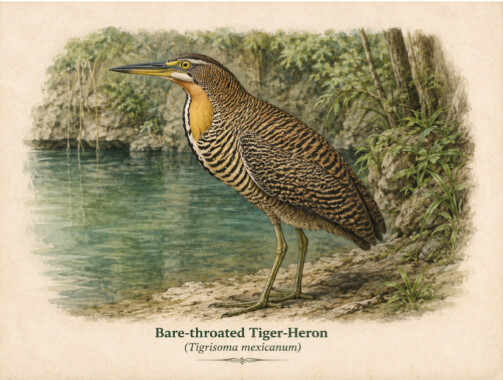
21. Bare-throated Tiger-Heron (Tigrisoma mexicanum)
A large, solitary heron with richly striped brown and buff plumage and a bare yellow-orange throat. It stands motionless at the water's edge waiting to strike. Cenotes and slow-moving rivers are reliable spots.
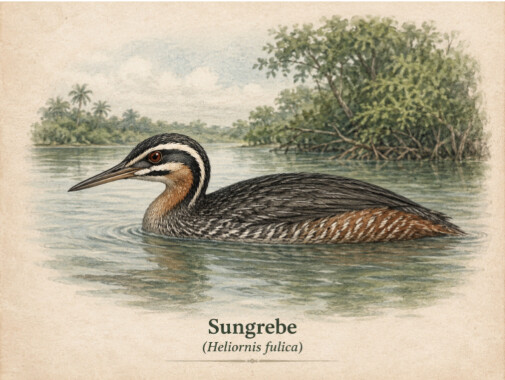
22. Sungrebe (Heliornis fulica)
One of the most unusual waterbirds in the Americas. The sungrebe has a distinctively striped head and rides low on the water like a small grebe. It's found on sheltered rivers and lagoons, including parts of Sian Ka'an.
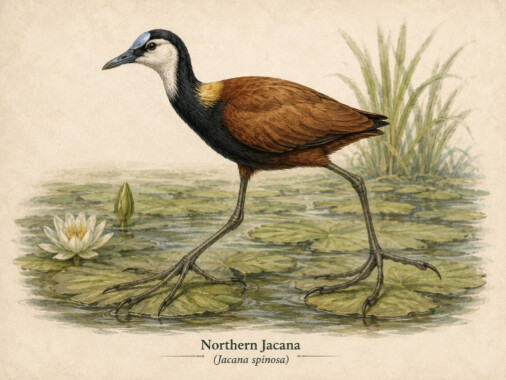
23. Northern Jacana (Jacana spinosa)
Jacanas are best known for walking on floating vegetation with their outsized toes and claws. The northern jacana is common on ponds and slow rivers, and females are notably larger than males the reverse of most bird species.
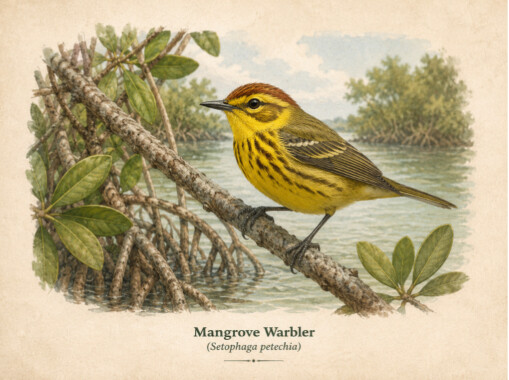
24. Mangrove Warbler (Setophaga petechia)
A subspecies of the yellow warbler specific to mangrove habitats. The male has a chestnut-streaked head and bright yellow plumage. Mangrove edges throughout the coast are a consistent place to find them year-round.
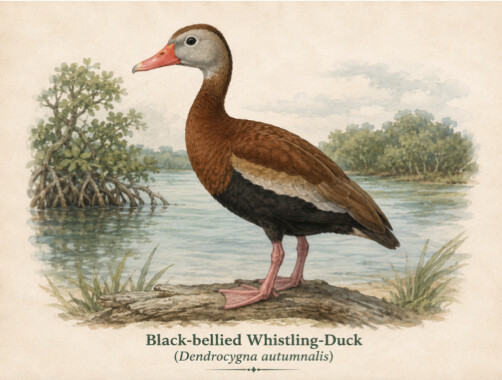
25. Black-bellied Whistling-Duck (Dendrocygna autumnalis)
A strikingly colored duck with a bright coral-red bill, chestnut body, and black belly. Unlike most ducks, they often perch in trees. Freshwater lagoons and flooded fields in the region regularly host large flocks.
What is the Rarest Bird of the Riviera Maya?
Most people arrive in the Yucatán with a loose idea of what the wildlife will look like. The ocellated turkey is not it. This is not the dull, heavy-bodied bird of North American farmyards. It is something closer to a peacock crossed with a jewel, and seeing one step out of the jungle into a forest clearing is the kind of moment that changes what you think a turkey can be.
The body plumage shifts between deep bronze and iridescent blue-green depending on how the light catches it. The tail fans open to reveal a series of eye-like spots, the ocelli the species is named for, each one ringed in vivid blue and gold. The head and neck are bare, covered in bright blue skin studded with orange-red nodules that look almost artificial up close. During breeding season, males develop a fleshy knob at the base of the bill that adds one more improbable detail to an already extraordinary bird.
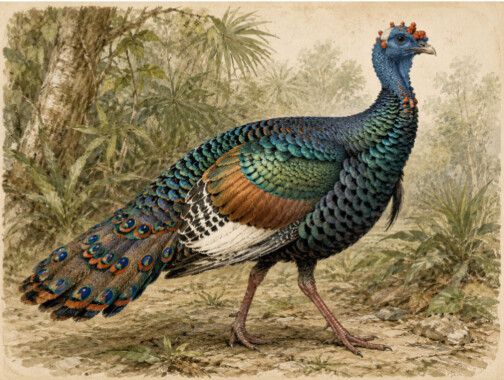
The ocellated turkey exists within a relatively small range: the Yucatán Peninsula, northern Belize, and parts of Guatemala's Petén. It favors lowland tropical forest with open ground nearby, which is why the clearings and manicured lawns around Mayan archaeological sites like Cobá and Uxmal are such reliable places to find it. The birds forage along the forest edge at dawn, moving through fallen leaves in search of seeds, insects, and berries. By mid-morning they tend to disappear back into the trees, so early starts matter.
The species is classified as Near Threatened by the IUCN, and a sighting is never guaranteed. But visitors who arrive at Cobá before the tour groups do, and who take the time to walk the quieter paths at the edge of the ruins, give themselves a real chance. For most travelers who encounter one, it becomes the wildlife highlight of the trip.
When Is the Best Time to Watch Birds in Playa del Carmen?
Year-round birding is possible, but the season matters depending on what you want to see.
October to March brings the highest diversity. Migratory warblers, shorebirds, and raptors arrive from North America, supplementing the permanent resident species. Mornings are cool and dry, which means birds are most active early.
April to June is the breeding season for many resident species. Toucans, trogons, and parrots are more vocal and visible. The heat increases, but early mornings remain excellent.
July to September is the wet season. Rain brings out more insect-eating birds and the vegetation is lush, but some days make fieldwork difficult. The trade-off: birding crowds are at their lowest.
Birdwatching from the Resort vs. Going Off-Property
This is a genuine decision for visitors who want to bird seriously. Staying at Sandos Caracol Eco Resort gives you access to on-property jungle, a cenote, and several distinct habitat types, which is meaningful. Most of the 25 species in this guide can be seen without leaving the grounds.
Off-property excursions to Sian Ka'an or Cobá significantly expand your list and give access to rarer and more specialist species. But they require an early start, transport planning, and a half to full day away from the beach. For casual observers, the resort itself delivers a satisfying amount of wildlife. For dedicated birders, combining both approaches over several days is the stronger option.
What this looks like in practice: A family at Sandos Caracol might spot toucans and parrots on a morning walk to the cenote, watch a heron fish from the dock, and hear the motmot calling from the canopy all before breakfast. A birder in the same group could join a guided excursion to Sian Ka'an in the afternoon and add a dozen more species to their list by sunset.
Plan Your Visit Around the Wildlife
Playa del Carmen delivers more wildlife than most beach destinations, and the birds are a big part of that. Whether you're traveling with a field guide or simply curious about what's flashing through the trees near your pool, the Riviera Maya tends to surprise visitors with how much there is to see.
Explore Sandos Caracol Eco Resort and plan your stay at one of the most nature-connected resorts in the region.
Frequently Asked Questions
Do I need a guided tour to see birds in Playa del Carmen?
No. Many species are easily visible from beaches, resort grounds, and roadside vegetation without a guide. That said, a knowledgeable local guide significantly increases both your success rate and your understanding of what you're seeing especially for forest species.
What binoculars should I bring for birdwatching in the Yucatán?
A standard 8x42 binocular works well in most conditions. The jungle can be dark, so a wider objective lens helps. Even a basic pair improves the experience significantly compared to birding without them.
Are there birds at the beach itself?
Yes. Frigatebirds, pelicans, terns, and various shorebirds are common along the Caribbean coast. Early mornings before the beach fills up are the most productive times.
Can I see toucans near Playa del Carmen?
Yes. Keel-billed toucans live in the forested areas throughout the Riviera Maya and are regularly seen at eco-resorts like Sandos Caracol. They're most active in the morning.
Is Sian Ka'an worth visiting for birds?
Sian Ka'an Biosphere Reserve is one of the best birding destinations in Mexico and is a UNESCO World Heritage Site. It's about an hour from Playa del Carmen and offers access to species not commonly seen elsewhere in the region.