



Sugar Skulls: Meaning, History and How to Make Them
Sugar skulls, or calaveras de azúcar, are decorated skulls made of molded sugar that Mexican families place on Day of the Dead altars to honor loved ones who have died. Many carry a name across the forehead, either of the person being remembered or of a friend who receives one as a gift. The tradition blends Indigenous ways of honoring the dead with a sugar-working technique that arrived from Spain.
Sugar skulls are small offerings with a big job. Each one is made to welcome back the soul of someone who has died, which is why it so often carries that person’s name. They’re also bright, cheerful and a little cheeky, and that mix of humor and remembrance captures the spirit of Día de Muertos better than almost anything else on the altar.
From early October, market stalls across Mexico fill with rows of white skulls trimmed in pink, green and yellow icing. This guide explains what sugar skulls mean, where the tradition comes from and how families use them. It also covers how to make your own at home and how to find them on a trip to Mexico.
What Are Sugar Skulls?
A sugar skull, or calavera de azúcar, is a skull-shaped candy made by pressing or pouring sugar into a mold. Once dry, it’s decorated with colored icing, foil, sequins or feathers. Sizes range from skulls small enough to fit in your palm to large ones made as the centerpiece of an altar.
In Mexico, you’ll often hear the affectionate calaveritas de azúcar. Sugar is the classic material, but it isn’t the only one.
Types of Day of the Dead Skulls
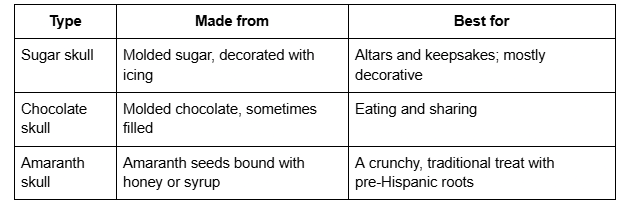
You’ll find all three in Mexican markets in the weeks before November 1. Many families buy a mix: sugar skulls for the ofrenda and chocolate skulls for the table.
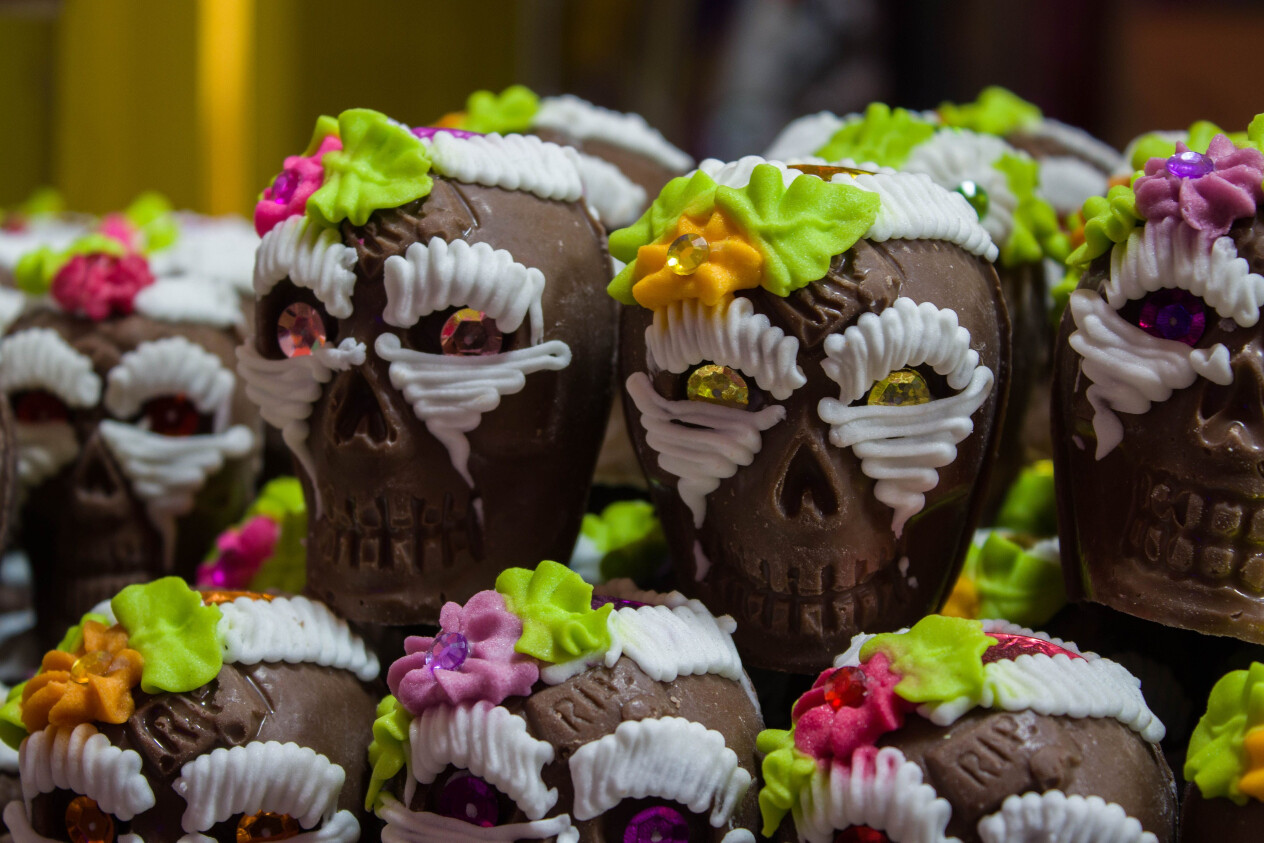
What Sugar Skulls Mean
The sugar skull meaning comes from the way Day of the Dead treats death. Rather than something to fear, death is seen as a natural part of life, and for a few days each year, families welcome the souls of loved ones home.
Sugar skulls play several roles in that welcome:
- Honoring someone by name. A skull with a loved one’s name on the forehead is placed on the altar in their memory.
- A lighthearted gift for the living. Friends and relatives exchange skulls with each other’s names, a gentle joke about something everyone shares.
- Sweetness for the visit. The bright colors reflect a holiday that celebrates lives rather than mourning them.
Many families believe the souls take in the essence of the offerings during their visit. Once the celebration ends, the skulls are often shared.
Where the Tradition Comes From
Day of the Dead skulls have deep roots in Mexico. Long before the Spanish arrived, Mesoamerican peoples used skulls in ceremonies honoring their gods and ancestors, as symbols of death and of the cycle between this life and the next.
Sugar came later. The technique for molding decorative sugar figures, known as alfeñique, traveled from the Arab world to Spain and then to Mexico during the colonial period. Mexican artisans adapted it to their own customs, and sugar skulls became part of the blend of Indigenous and Catholic traditions that shapes Día de Muertos today.
The city of Toluca, in the State of Mexico, is especially known for the craft. Each fall, its Feria del Alfeñique fills the arcades of the city center with sugar skulls, chocolate skulls and other seasonal sweets made by local artisans.
How Sugar Skulls Are Used on the Ofrenda
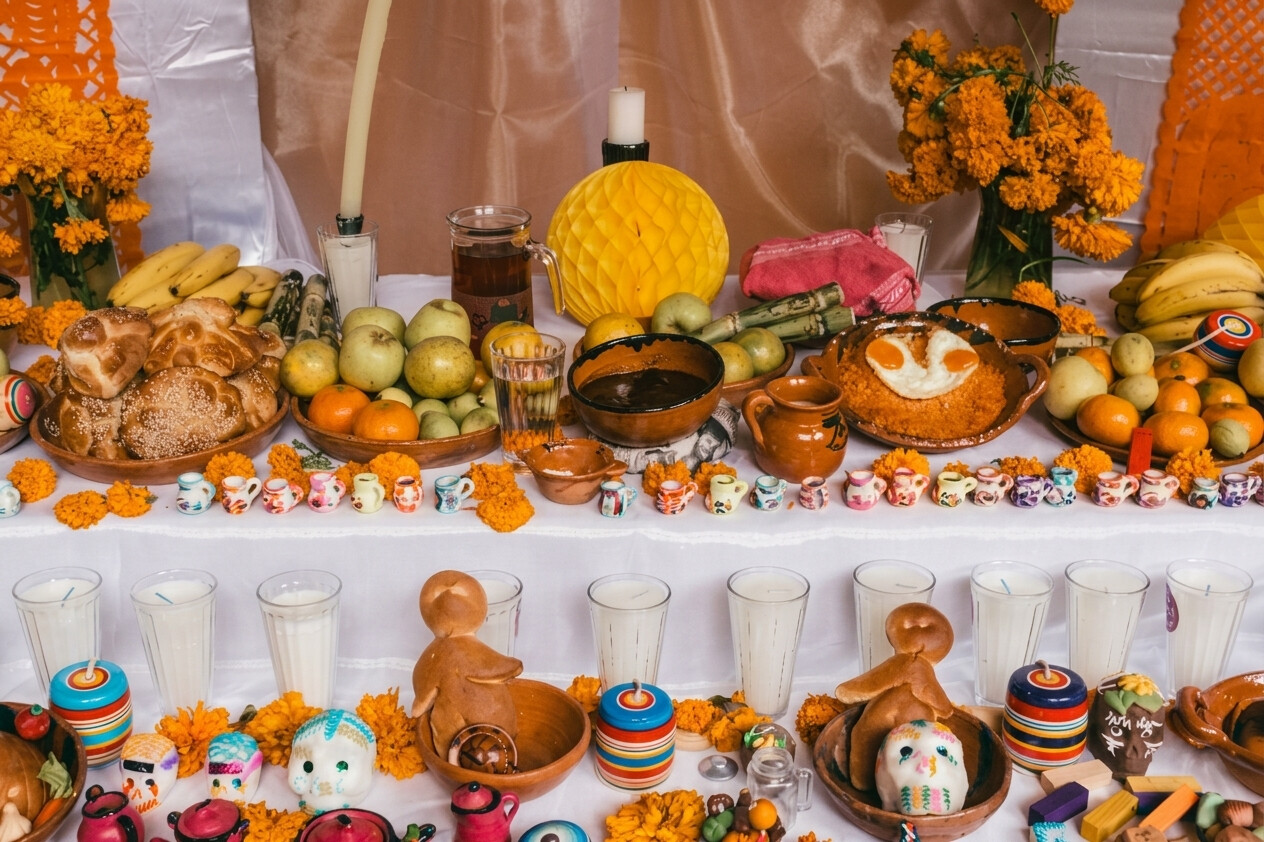
On the altar, sugar skulls sit alongside candles, photographs, water, salt, pan de muerto and cempasúchil, the traditional Day of the Dead flower. Small skulls are often set out for children who have died, who are remembered on November 1. Larger ones are placed for adults on November 2.
If you’re building an altar at home, our guide on how to make a Day of the Dead altar at home explains what goes on each level. The history of papel picado covers the cut-paper banners that often hang just above the skulls.
Popular Sugar Skull Designs
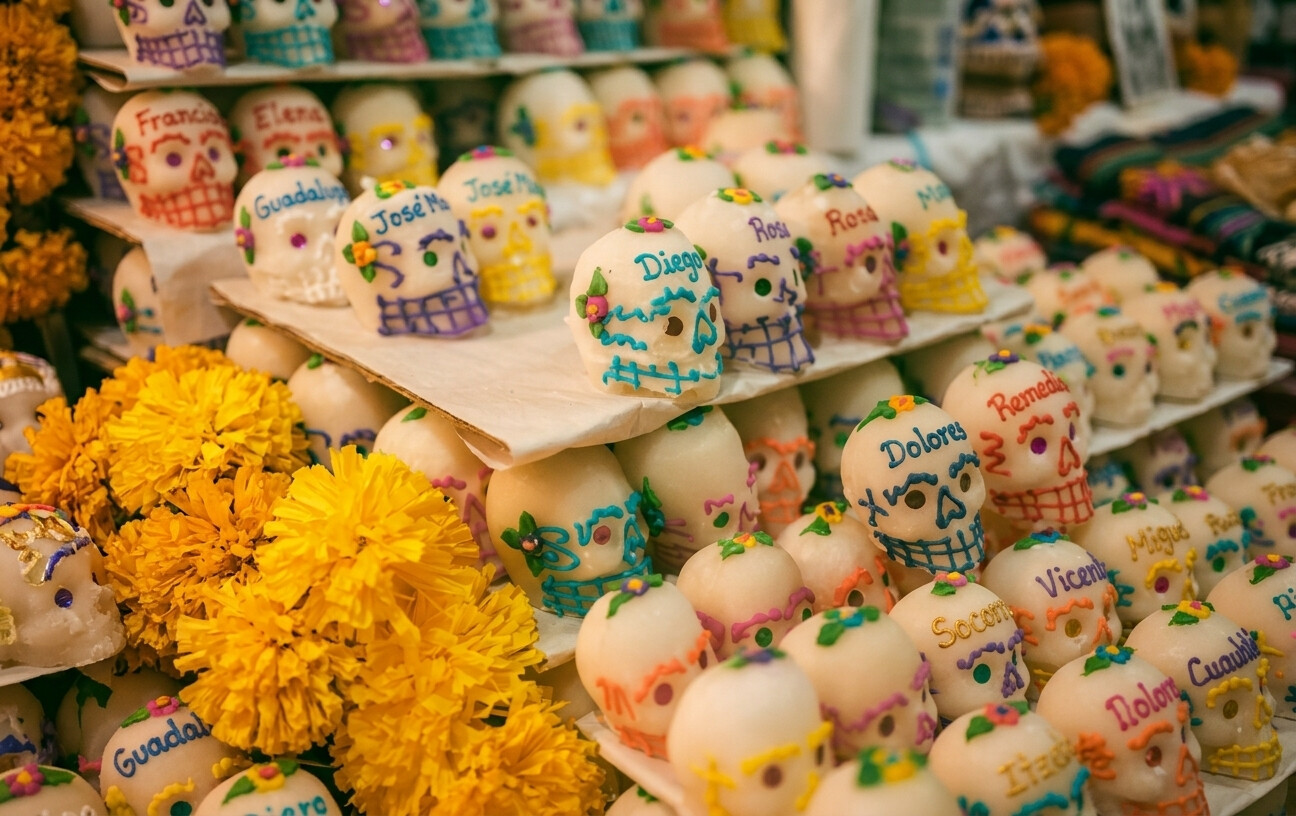
Traditional sugar skull designs follow a few familiar patterns, and most decorators mix and match them:
- A name banner across the forehead, which dedicates the skull to a specific person
- Flowers and petals on the forehead and cheeks, often inspired by marigolds
- Foil or colored eyes, the shiny signature of classic market skulls
- Swirls, dots and hearts around the eyes and chin for color and personality
- Scalloped teeth along the jaw, which turn the skull’s expression into a smile
The same look inspired one of the holiday’s best-known figures. La Catrina, the elegant skeleton lady, is often shown with a painted sugar skull face, and many people copy it for Día de Muertos. Our Catrina makeup tutorial walks you through it step by step.
How to Make Sugar Skulls at Home
If you’re wondering how to make sugar skulls, the process is simple but needs patience while the skulls dry. You’ll need a sugar skull mold, available at craft stores and online.
Sugar Skull Recipe
This sugar skull recipe makes about six to eight small skulls, depending on your mold.
For the skulls:
- 2 cups (400 g) granulated sugar
- 2 teaspoons meringue powder
- 2 teaspoons water
For the icing:
- 2 cups (240 g) powdered sugar
- 1 1/2 tablespoons meringue powder
- 3 to 4 tablespoons water
- Food coloring in several colors
Step by Step
- Mix the sugar. Combine the granulated sugar and meringue powder, then add the water. Mix with your hands until the sugar feels like damp sand and holds together when squeezed.
- Pack the molds. Press the mixture firmly into the mold and scrape the back flat with a straight edge.
- Unmold. Place a piece of cardboard over the mold, flip it and lift the mold away carefully.
- Let them dry. Leave the skulls for at least 8 hours, or overnight, until hard. For a two-piece mold, join the halves with a little icing once both are dry.
- Make the icing. Beat the powdered sugar, meringue powder and water until thick and glossy. Divide it into bowls and tint each one.
- Decorate. Pipe on names, flowers, swirls and dots, then add foil, sequins or colored eyes. Let the icing set for a few hours before handling.
Tips for success:
- Make them on a dry day. Humidity keeps sugar from hardening, so in a humid climate, allow extra drying time or run a fan nearby.
- Add water a few drops at a time. Too much and the skulls slump; too little and they crumble.
- Start decorating with the name. It’s the hardest part, and the other details can fill in around it.
Finding Sugar Skulls on a Trip to Mexico
The weeks leading up to November 1 and 2 are the best time to see sugar skulls in Mexico. Markets stack them by the hundreds, bakeries sell chocolate versions, and altars appear in shops and hotel lobbies.
For most visitors, the choice is between enjoying the celebration at the resort and finding it in town. A resort celebration brings altars, face painting and traditional food to you, which is easiest with kids or on a short stay. A local market takes more planning, but it shows you how families shop for their own ofrendas. At many stalls, you can have a name piped onto a skull while you wait, and buying from local artisans supports the people who keep the craft alive. Our Day of the Dead costume ideas can help you plan an outfit for either.
If you’d like to bring skulls home, wrap each one in tissue paper and pack them in a hard container in your carry-on. Sugar skulls are fragile, and checked bags are rarely gentle.
What this looks like in practice: A family staying at Sandos Caracol Nature Resort at the end of October spends the morning swimming in the resort’s cenotes. In the afternoon, they visit a market in Playa del Carmen, where each child picks a sugar skull and watches their name being piped across the forehead. That evening, they join the resort’s Day of the Dead celebration with their faces painted to match. The skulls travel home in a shoebox in their carry-on, and the kids can explain exactly what they mean.
Final Thoughts on Sugar Skulls
Sugar skulls are small, but they carry a big idea: the people we’ve lost deserve to be remembered with color and sweetness, not only sadness. Making a few at home is an easy way to share the tradition with your family wherever you live. Seeing them stacked in a Mexican market in late October shows you how much the holiday means to the people who celebrate it.
If you’d like to experience Día de Muertos in person, plan your trip for late October or early November. Explore Sandos resorts in Mexico to find a stay with time for both the beach and the celebration.
Frequently Asked Questions
Can you eat sugar skulls?
Traditional sugar skulls are made from edible ingredients, but they’re very hard and mostly decorative. Skulls decorated with foil, feathers or sequins shouldn’t be eaten. If you’d like something to enjoy, choose a chocolate skull.
Why do sugar skulls have names on them?
The name dedicates the skull to someone. On an altar, it honors a person who has died. Given as a gift, it’s a friendly reminder that life doesn’t last forever.
Are sugar skulls only for Day of the Dead?
They’re mostly made and sold for Día de Muertos, from early October through November 2. The sugar skull look itself is now popular all year in art, tattoos and fashion.
How long do sugar skulls last?
Kept away from humidity and sunlight, sugar skulls can last a year or longer as decorations. Store them in an airtight container between celebrations.
Can kids help make sugar skulls?
Yes. Packing the molds and decorating are both easy for children. Adults may want to handle unmolding, since freshly packed skulls break easily.
What should I do with sugar skulls after Day of the Dead?
Many families share edible skulls once the altar comes down. Decorative ones can be stored and brought out again next year, especially those carrying the name of someone special.