



Día de la Virgen de Guadalupe: Meaning & Traditions
Día de la Virgen de Guadalupe is celebrated every December 12 in honor of Our Lady of Guadalupe, Mexico's patron, and marks her apparitions to Juan Diego on Tepeyac hill in December 1531. Millions of pilgrims travel to the Basilica in Mexico City, and churches across the country hold midnight songs, masses, processions and fireworks. In 2026, December 12 falls on a Saturday.
Why December 12 matters in Mexico
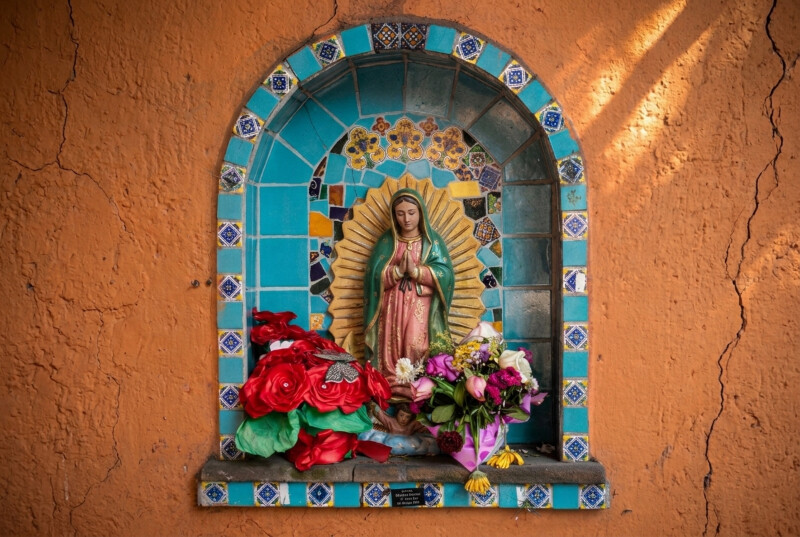
For many Mexicans, Our Lady of Guadalupe feast day is one of the most important religious dates of the year, alongside Easter and Christmas. The Virgin of Guadalupe is the patron of Mexico and of the Americas, and her image appears everywhere: in churches and homes, on market stalls, taxi dashboards and murals.
The day of the Virgin of Guadalupe also opens the holiday season. December 12 is the start of what Mexicans call the Guadalupe–Reyes marathon, which runs through Las Posadas and Christmas to Día de Reyes on January 6. Our guide to Christmas in Mexico covers the rest of the season.
The story of the Virgin of Guadalupe
The Virgen de Guadalupe story begins on December 9, 1531, when Juan Diego, an Indigenous man, was walking past Tepeyac hill, north of what is now Mexico City. According to tradition, a young woman appeared to him, spoke to him in Náhuatl and asked for a church to be built on the hill.
The bishop asked for a sign. On December 12, the Virgin told Juan Diego to gather roses from the top of the hill, even though it was winter. When he opened his cloak, or tilma, in front of the bishop, the roses fell out and an image of the Virgin was printed on the cloth.
That tilma is the image displayed in the Basilica today. Juan Diego was canonized in 2002, becoming the first Indigenous saint from the Americas.
How Mexico celebrates the Virgin of Guadalupe day
The celebrations start on the evening of December 11 and run through the 12th. If you are in Mexico for Virgin of Guadalupe day, these are the traditions you are most likely to see:
- Las Mañanitas: at midnight, crowds sing the traditional birthday song to the Virgin, inside churches and in the streets outside
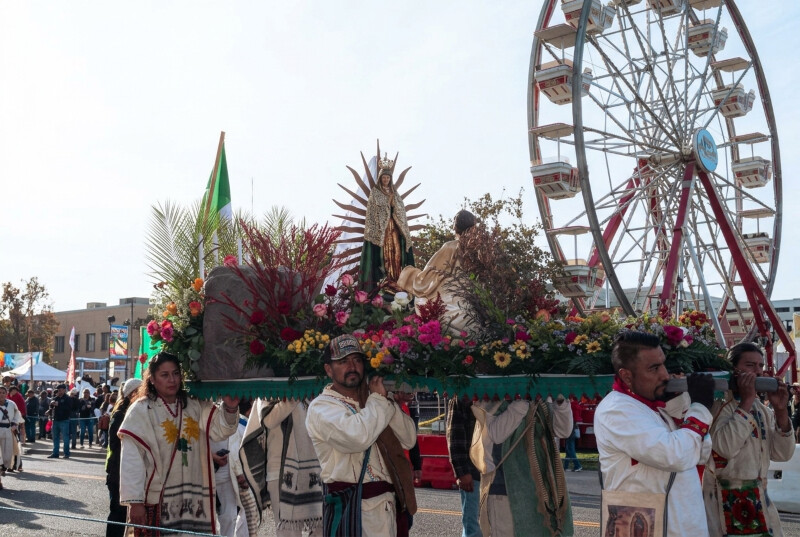
- Pilgrimages: groups walk, cycle or run for days, often carrying images of the Virgin and lit torches
- Processions and masses: parishes hold masses from early morning, with processions through the neighborhood
- Children in traditional dress: boys dress as Juan Diego, with a painted moustache and a small tilma, and girls dress as inditas
- Music and dance: mariachi, folk dancers and matachines perform outside churches
- Fireworks and food stalls: expect rockets at dawn and stalls selling tamales, atole, buñuelos and pozole
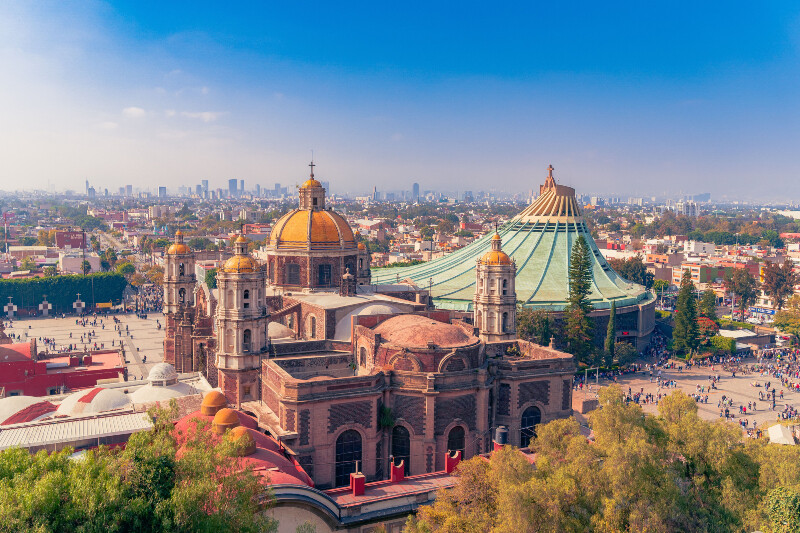
The Basilica of Guadalupe in Mexico City
The Basilica of Guadalupe sits at the foot of Tepeyac hill and is one of the most visited Catholic shrines in the world. The modern basilica, opened in 1976, holds the original tilma, and the older baroque basilica stands beside it.
In December 2025, the Mexico City authorities counted almost 13 million pilgrims around the Basilica, a record. If you plan to visit, go in the days before or after December 12, when you can see the tilma without the biggest crowds.
Celebrating in Cancún, Playa del Carmen and Los Cabos
You do not need to be in Mexico City to see the celebrations. Parish churches in Cancún, Playa del Carmen and Los Cabos hold Mañanitas at midnight, morning masses and processions, and you will see families arriving with flowers and children in traditional dress.
If you are staying at Sandos Playacar or Sandos Caracol, downtown Playa del Carmen is a short ride away. From Sandos Cancún, the parishes in downtown Cancún are the nearest place to join in.
Joining in or watching from the beach
December 12 is a busy night around churches, with fireworks that can start before dawn and traffic near the main parishes. Joining the celebrations gives you a side of Mexico most visitors miss, but it means a late night or an early start. If you would rather keep your holiday quiet, you can still see the decorations and food stalls during the day and be back at the pool by the afternoon.
What this looks like in practice: a couple staying in Playa del Carmen takes a taxi into town on the evening of December 11. They join the crowd outside the church for Las Mañanitas at midnight, try tamales and atole from the stalls, and are back at the hotel by 1 a.m. The next day they go to the beach and watch the last processions in town in the evening.
Tips for visitors on December 12
If you're visiting Mexico on December 12, a little planning will help you enjoy the Día de la Virgen de Guadalupe celebrations while respecting local traditions. Here are five tips to keep in mind.
- Dress modestly if you go inside a church: shoulders and knees covered.
- Ask before taking photos of people, especially during mass.
- Carry small change in pesos for food stalls and candles.
- Expect fireworks early in the morning near churches.
- Allow extra time for taxis around the main parishes.
Final thought
Día de la Virgen de Guadalupe shows how deeply faith and family run in Mexico, and it is one of the easiest celebrations for visitors to see. If your December trip covers the 12th, set aside one evening for Las Mañanitas.
Planning a trip for early December? It is one of the best-value weeks of the season. Explore our special offers and plan your stay.
Frequently asked questions
Is December 12 a public holiday in Mexico? It is not one of the official rest days in Mexico's labour law, so banks and most businesses stay open. Many people still take the day off or leave work early.
What does the Virgin of Guadalupe represent? She represents the Virgin Mary as she appeared in Mexico, and she is a symbol of Mexican identity as well as faith.
Can tourists attend the celebrations? Yes. Visitors are welcome at masses and in the streets around churches. Be respectful and follow what the people around you do.
What are Las Mañanitas? It is the traditional Mexican birthday song. On the night of December 11, crowds sing it to the Virgin at midnight.
Do I need to go to Mexico City to see the celebrations? No. Churches across Mexico, including in Cancún, Playa del Carmen and Los Cabos, hold their own celebrations.
What should I eat on December 12? Look for tamales, atole, buñuelos and pozole at the stalls set up outside churches.